







What's Happening?
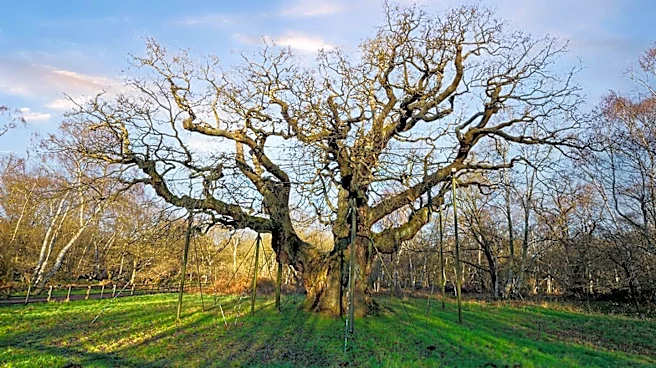
Local advocates in Dade City, Florida, are actively pursuing official recognition for the historical significance of the Heritage Oak, a tree estimated to be 250 years old. This initiative aims to highlight the oak's long-standing presence and its connection
to the community's history. The efforts involve various steps to formally acknowledge the tree's importance, potentially leading to its preservation and increased public awareness. The movement underscores a growing trend in local communities to identify and protect natural landmarks that hold cultural and historical value. The advocates believe that by securing historical recognition, they can ensure the Heritage Oak's legacy for future generations and integrate it more formally into Dade City's historical narrative. This local endeavor reflects a broader interest in preserving natural heritage alongside built heritage.
Why It's Important?
The push for historical recognition of the Heritage Oak in Dade City is significant for several reasons. Firstly, it emphasizes the value of natural landmarks in shaping local identity and history, often overlooked in favor of man-made structures. Such recognition can foster a deeper connection between residents and their environment, promoting civic pride and environmental stewardship. Secondly, formal historical designation can unlock resources for preservation, including grants and protective measures, ensuring the tree's longevity. This initiative could also serve as a model for other communities looking to identify and protect their own natural heritage assets. Economically, a recognized historical landmark can boost local tourism and educational opportunities, drawing visitors interested in unique natural and historical sites. It also highlights the role of grassroots efforts in influencing local policy and conservation.
What's Next?
The next steps for the Dade City advocates will likely involve formal applications to local or state historical preservation bodies, gathering documentation, and building public support for the Heritage Oak's recognition. This may include historical research to solidify the tree's age and any significant events it has witnessed, as well as community outreach programs to engage residents. Public hearings or presentations might be scheduled to discuss the proposal and gather feedback. If successful, the tree could receive a historical marker, be included in local historical tours, or even be designated as a protected natural monument. The advocates will also need to consider long-term maintenance and protection plans for the oak, ensuring its health and safety once recognized. The outcome could set a precedent for how natural elements are integrated into historical preservation efforts in the region.
Beyond the Headlines
Beyond the immediate goal of historical recognition, the effort to preserve the Heritage Oak touches upon deeper themes of environmental consciousness and the evolving definition of heritage. It challenges the traditional view that history is solely about human constructs and events, expanding it to include the natural world as a silent witness and participant in historical narratives. This movement reflects a growing societal appreciation for ecological heritage and the intrinsic value of ancient natural elements. Ethically, it raises questions about our responsibility to protect long-lived natural entities that predate human settlement and development. Culturally, such initiatives can inspire a re-evaluation of local landscapes, encouraging communities to see their natural surroundings not just as resources but as integral parts of their shared past and identity, fostering a more holistic understanding of heritage.