


What's Happening?
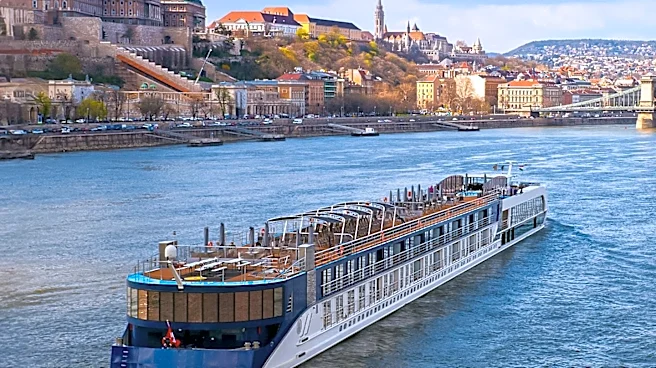
River cruise lines in Europe are facing significant challenges due to low water levels caused by droughts and heatwaves. Prominent rivers like the Danube and the Rhine have seen water levels drop to near-record lows, affecting cruise operations. Companies
such as Uniworld, Viking, and TravelMarvel have had to adjust their itineraries, change embarkation points, and in some cases, cancel or reroute sailings. To mitigate disruptions, some cruise lines are implementing ship swaps, allowing passengers to transfer to identical sister ships positioned on unaffected sections of the river. This strategy helps maintain the planned itineraries and minimizes the impact on the guest experience. Despite these efforts, some passengers have had to endure bus transfers and missed stops, which are integral parts of the cruise experience.
Why It's Important?
The low water levels in European rivers highlight the broader impact of climate change on the travel and tourism industry. River cruises, a popular segment of the travel market, are particularly vulnerable to environmental changes. The disruptions not only affect the cruise lines' operations but also the local economies that rely on tourism. The need for itinerary changes and ship swaps increases operational costs for cruise companies and can lead to customer dissatisfaction. This situation underscores the importance of flexible travel plans and the potential need for enhanced travel insurance coverage to protect against such disruptions. The ongoing challenges also emphasize the necessity for the travel industry to adapt to changing environmental conditions and develop strategies to mitigate their impact.
What's Next?
As temperatures remain high, further disruptions to river cruises are anticipated. Cruise lines will continue to monitor water levels and adjust their operations accordingly. Passengers are advised to stay informed about potential changes to their itineraries and maintain communication with their cruise operators. The industry may also explore long-term solutions, such as investing in more adaptable ships or developing alternative routes, to better cope with environmental challenges. Additionally, there may be increased advocacy for policies addressing climate change to prevent future disruptions.