






What's Happening?
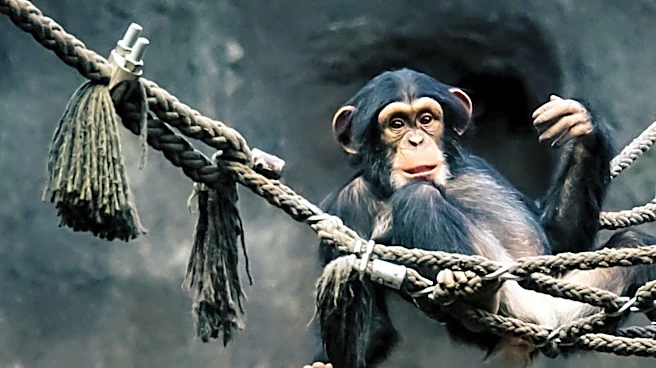
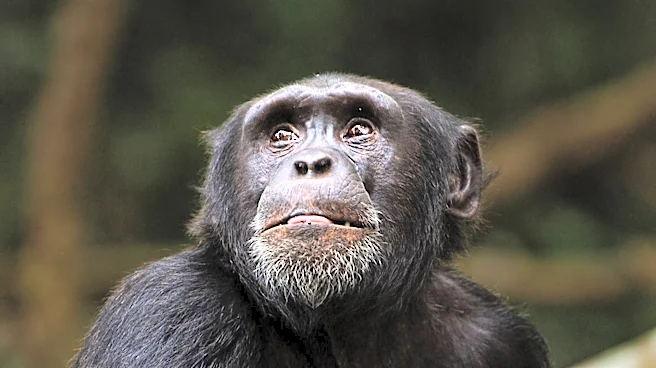
The National Institutes of Health (NIH) announced that the last group of chimpanzees owned by the U.S. government and residing in a laboratory will be moved to a sanctuary next year. This action fulfills a commitment made over a decade ago by the NIH to cease
funding for biomedical research on chimpanzees. Starting early next year, approximately three dozen chimpanzees currently housed at the Keeling Center for Comparative Medicine and Research in Bastrop, Texas, will be transferred to Chimp Haven, a 200-acre federal sanctuary located in Keithville, Louisiana. Chimp Haven is the only such federal sanctuary in the United States. NIH Director Jay Bhattacharya stated that completing these transfers will honor the NIH's pledge, which was initially announced in November 2015, to retire all NIH-owned chimpanzees to a sanctuary.
Why It's Important?
This move marks a significant milestone in the ethical treatment of research animals and reflects a broader shift in scientific policy regarding the use of chimpanzees in biomedical research. The decision to retire these chimpanzees to a sanctuary underscores a growing consensus within the scientific community and among the public that chimpanzees, due to their cognitive abilities and social complexity, deserve special consideration. Ending their use in invasive research and providing them with a more natural, protected environment aligns with evolving ethical standards. This action also signals the culmination of years of advocacy from animal welfare organizations and a re-evaluation of the necessity and efficacy of chimpanzee research in modern biomedical science. It reinforces the idea that scientific progress can and should be pursued in ways that minimize harm to sentient beings, potentially influencing future policies on animal research across various species.
What's Next?
The transfer of the remaining chimpanzees to Chimp Haven will complete the NIH's long-standing commitment, effectively ending the era of government-funded biomedical research on chimpanzees in the United States. Chimp Haven will assume responsibility for the long-term care and well-being of these animals, providing them with a naturalistic habitat and social structures. This transition will likely lead to increased focus on alternative research methods that do not involve chimpanzees, such as advanced in vitro models, computational simulations, and research on other species where ethical concerns are less pronounced or where the scientific justification is stronger. The successful integration of these chimpanzees into the sanctuary environment will be a key next step, ensuring their welfare and adaptation to their new lives. This event may also encourage other nations or private research institutions to re-evaluate their own policies regarding chimpanzee research.
Beyond the Headlines
The retirement of research chimpanzees to sanctuaries represents more than just a policy change; it signifies a profound cultural and ethical shift within the scientific enterprise. It highlights the increasing recognition of animal sentience and the moral responsibilities that come with using animals in research. This development could catalyze broader discussions about the ethical boundaries of scientific inquiry and the development of more humane and scientifically advanced research methodologies. It also underscores the power of public advocacy and evolving societal values in shaping scientific practice. Long-term, this shift may encourage greater investment in non-animal research alternatives, fostering innovation in areas like organ-on-a-chip technology, advanced cell cultures, and artificial intelligence-driven drug discovery, ultimately leading to more ethical and potentially more effective scientific outcomes. The legacy of chimpanzee research will now be viewed through a lens of both scientific contribution and ethical re-evaluation.