

What's Happening?
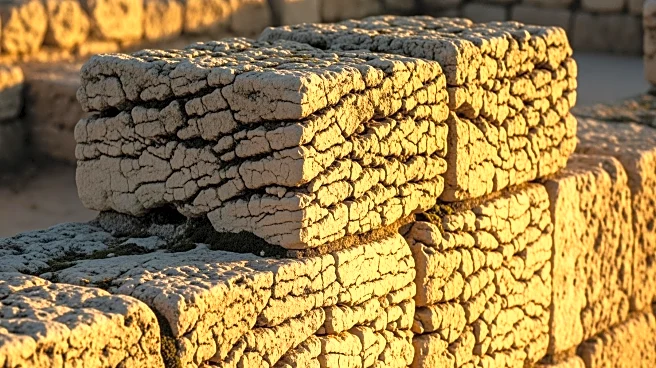
Archaeologists from the Israel Antiquities Authority have uncovered one of the longest and best-preserved sections of Jerusalem's Hasmonean-period city wall at the Tower of David Museum. The wall, dating back to the late second century BCE, was revealed
during excavations ahead of the museum's new Schulich Wing construction. The exposed segment, known as the 'First Wall,' extends over 40 meters and is approximately 5 meters thick. The wall was originally over 10 meters high, though only its lower courses remain. The discovery raises questions about its intentional destruction, with theories suggesting it was dismantled either by the Hasmoneans themselves or later by King Herod.
Why It's Important?
This archaeological discovery provides tangible evidence of Jerusalem's historical significance during the Hasmonean period. It offers insights into the city's fortifications and the political dynamics of the era, particularly the conflicts between the Hasmoneans and the Seleucid Empire. The findings contribute to the understanding of Jerusalem's ancient history and its strategic importance. For the Tower of David Museum, the wall's preservation and display will enhance its cultural and educational offerings, attracting visitors interested in the city's rich heritage. The discovery also reinforces historical narratives connected to Jewish traditions, such as Hanukkah.
What's Next?
The Tower of David Museum plans to preserve and display the wall section as part of its new Schulich Wing. Visitors will be able to view the wall through a transparent floor, accompanied by artistic interpretations of Jerusalem's heritage. The museum's expansion, funded by the Schulich Foundation, aims to enhance cultural and educational initiatives. Further archaeological research may continue to explore the wall's history and its role in Jerusalem's fortifications. The findings may also prompt discussions among historians and archaeologists regarding the political and military strategies of the Hasmonean period.