







What's Happening?
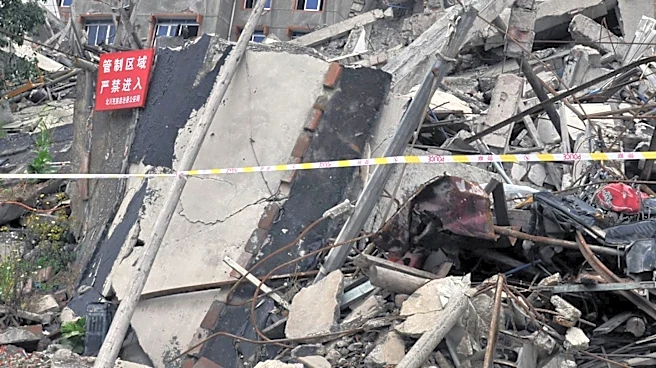
A 5.3-magnitude earthquake occurred in Zadoi County, Yushu Tibetan Autonomous Prefecture, located in northwest China's Qinghai Province. The seismic event took place at 4:39 p.m. Saturday (Beijing Time). The China Earthquake Networks Center reported the
earthquake. Details regarding potential damage or casualties were not immediately available in the provided source, which primarily focused on the occurrence and magnitude of the earthquake. The event highlights the ongoing seismic activity in the region.
Why It's Important?
While this earthquake occurred outside the U.S., it is important in the broader context of global seismic activity and disaster preparedness. Major earthquakes in any part of the world can prompt international discussions on earthquake engineering, early warning systems, and humanitarian aid, areas where the U.S. often plays a significant role. U.S. scientific agencies, such as the U.S. Geological Survey (USGS), monitor global seismic events, contributing to a worldwide understanding of earthquake patterns and risks. Although there is no direct impact on U.S. industries or economy from this specific event, advancements in seismic research or disaster response protocols in one region can inform practices globally, including in earthquake-prone areas within the U.S.
What's Next?
Following the earthquake, local authorities in China will likely assess the extent of any damage and initiate response efforts. Seismologists will continue to monitor for aftershocks and analyze the seismic data to better understand the geological activity in the region. International organizations and aid groups may offer assistance if the impact is significant. For the U.S., there are no direct immediate next steps, but its scientific community will likely incorporate data from this event into ongoing global seismic research.
Beyond the Headlines
Earthquakes, regardless of their location, underscore the persistent geological forces shaping our planet and the vulnerability of human infrastructure to natural disasters. This event in Qinghai serves as a reminder of the importance of robust building codes, effective emergency response systems, and public education on earthquake safety. Globally, there is a continuous effort to improve earthquake prediction and mitigation technologies. The lessons learned from seismic events in one country can contribute to a collective knowledge base that benefits all nations, including the U.S., in enhancing resilience against future seismic threats.