
What's Happening?
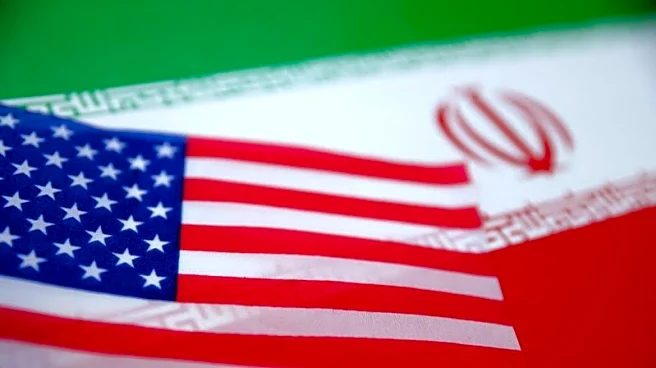
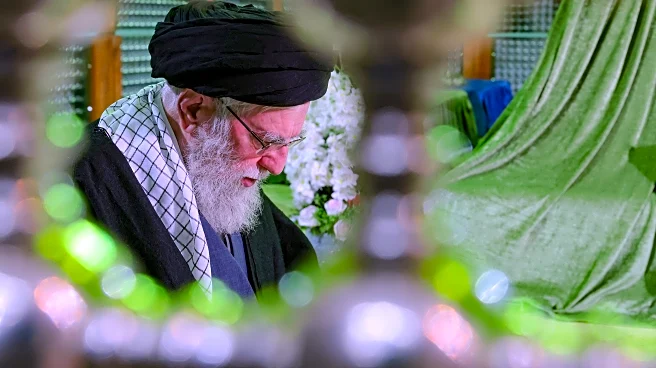
President Trump was expected to authorize a military strike against Iran last Wednesday, amid heightened tensions between the U.S. and the Iranian regime. However, a message from Iranian Foreign Minister
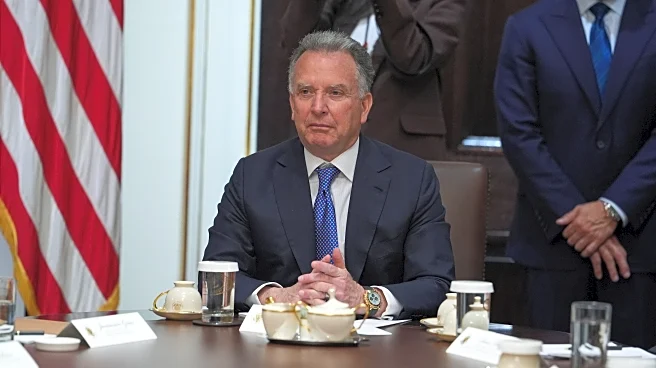
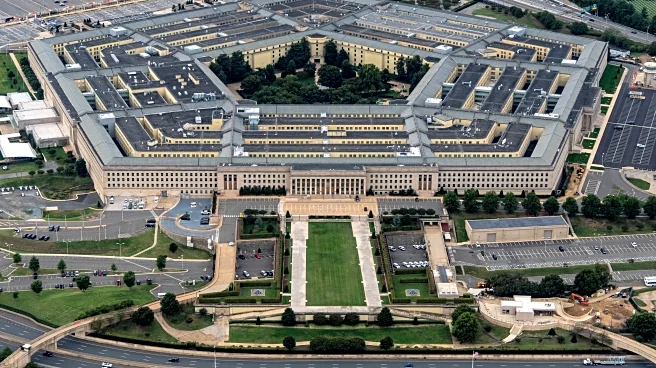
Abbas Araghchi, relayed by U.S. envoy Steve Witkoff, indicated that Iran had halted the executions of approximately 800 people. This development led President Trump to delay the decision, as reported by The Washington Post. The U.S. military had been on high alert, with preparations seemingly underway for an imminent attack. Despite the de-escalation, U.S. Central Command has been instructed to maintain high readiness, and the aircraft carrier USS Abraham Lincoln is being deployed to the Middle East. Key U.S. allies, including Israel, Saudi Arabia, Qatar, and Egypt, urged restraint, fearing regional instability and potential Iranian retaliation.
Why It's Important?
The decision to delay the strike on Iran holds significant implications for U.S. foreign policy and regional stability in the Middle East. A military strike could have escalated tensions, potentially leading to a broader conflict involving Iran's regional proxies, such as Hezbollah and the Houthis. The move to hold off on military action reflects a cautious approach, balancing the need to address Iran's actions with the risks of destabilizing the region further. The situation underscores the complex dynamics of U.S. alliances in the Middle East, where Sunni-majority states view Shiite-majority Iran as a threat but also prioritize regional stability. The decision also highlights the influence of diplomatic channels and the potential for de-escalation through communication.
What's Next?
While the immediate threat of a U.S. strike on Iran has been averted, the situation remains tense. The deployment of the USS Abraham Lincoln to the region suggests that the U.S. is keeping military options open. President Trump may have another opportunity to authorize strikes within the next few weeks as additional U.S. assets arrive in the region. The U.S. administration's approach will likely continue to involve a combination of military readiness and diplomatic engagement. The international community will be closely watching for any further developments, particularly in light of Iran's response and the potential for renewed tensions.