




What's Happening?
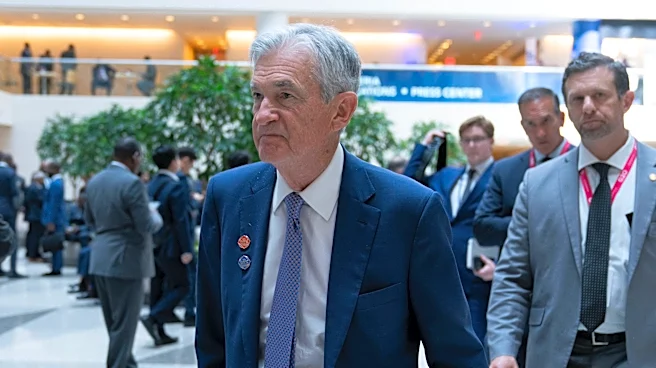
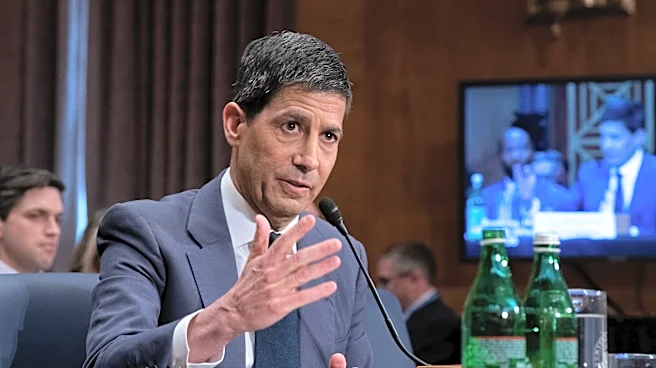
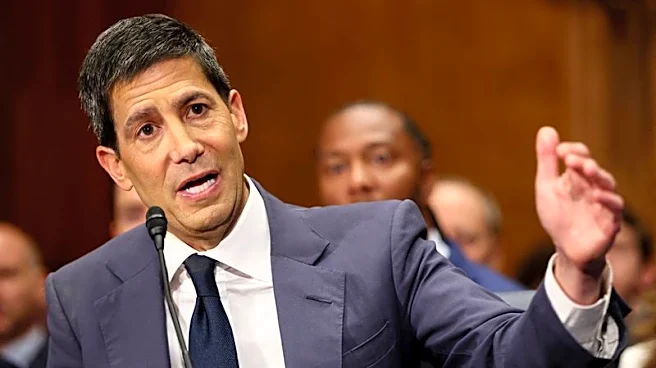
A Senate committee has scheduled a vote to advance Kevin Warsh's nomination to lead the Federal Reserve, following the closure of a criminal investigation into current Fed Chair Jerome H. Powell. U.S. Attorney Jeanine Pirro announced the end of the probe,
which had been a significant barrier to Warsh's confirmation. The investigation focused on the Fed's $2.5 billion headquarters renovation. Although the inquiry could resume if new evidence emerges, its closure has cleared a path for Warsh's nomination. The Senate Banking Committee, led by Republicans, plans to vote on April 29. The committee holds a narrow 13-11 majority, making any defection critical. Sen. Thom Tillis, who had previously blocked Warsh's nomination, has not yet indicated his current stance. Democrats, led by Sen. Elizabeth Warren, remain skeptical, criticizing the administration's handling of the Fed's independence and the ongoing investigation into Fed governor Lisa Cook.
Why It's Important?
The closure of the investigation into Powell and the advancement of Warsh's nomination are significant for the Federal Reserve's leadership and its independence. The Fed plays a crucial role in setting monetary policy, and its leadership can influence economic stability. The investigation was seen by some as an abuse of power, potentially undermining the Fed's independence. Warsh's confirmation could align the Fed more closely with President Trump's economic policies, which have included pressure to lower interest rates. This development could impact financial markets and economic policy, affecting stakeholders across the U.S. economy. The outcome of the Senate vote will be closely watched by investors and policymakers, as it could signal shifts in the Fed's approach to interest rates and economic management.
What's Next?
The Senate Banking Committee's vote on April 29 will determine whether Warsh's nomination advances. If confirmed, Warsh would replace Powell, whose term as Fed chair ends on May 15. Powell has indicated he would remain on the Fed's board until a successor is confirmed, but President Trump has threatened to fire him if he does not step down. This situation could lead to uncertainty at the Fed, potentially affecting market stability. The ongoing investigation into Fed governor Lisa Cook adds another layer of complexity. Political reactions, particularly from Democrats, will likely continue, focusing on the Fed's independence and the administration's influence over monetary policy.