
What's Happening?
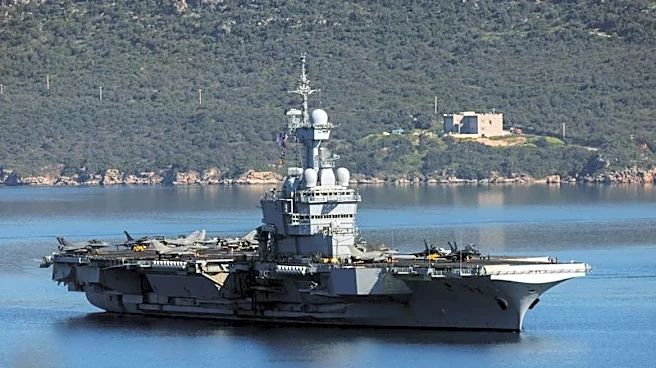
The United States and Iran have engaged in a series of retaliatory strikes in the Strait of Hormuz, a critical maritime passage for global oil shipments. Despite the exchange of fire, President Trump has
stated that the ceasefire between the two nations remains intact. This development follows a period of heightened tensions between the U.S. and Iran, with both countries having a history of conflict in the region. The recent military actions have raised concerns about the stability of the ceasefire and the potential for further escalation.
Why It's Important?
The Strait of Hormuz is a vital corridor for the global oil supply, and any disruption in this area can have significant implications for international energy markets. The ongoing tensions between the U.S. and Iran could lead to increased volatility in oil prices, affecting economies worldwide. Additionally, the situation underscores the fragile nature of diplomatic relations in the Middle East, where geopolitical conflicts can quickly escalate into broader confrontations. The U.S. military presence in the region and its strategic interests in maintaining open shipping lanes further complicate the dynamics.
What's Next?
The international community will likely monitor the situation closely, with potential diplomatic efforts to de-escalate tensions. The U.S. may engage with allies to reinforce its position and seek support for maintaining stability in the region. Iran's response to the U.S. actions will be critical in determining the next steps, as any further military engagement could lead to a broader conflict. The situation may also prompt discussions within the United Nations regarding measures to ensure maritime security in the Strait of Hormuz.