







What's Happening?
The United States is striving to maintain its global dominance in technology by controlling access to critical components like semiconductors, while China is rapidly advancing in AI and clean technology. The U.S. aims to curb China's growth in AI by restricting
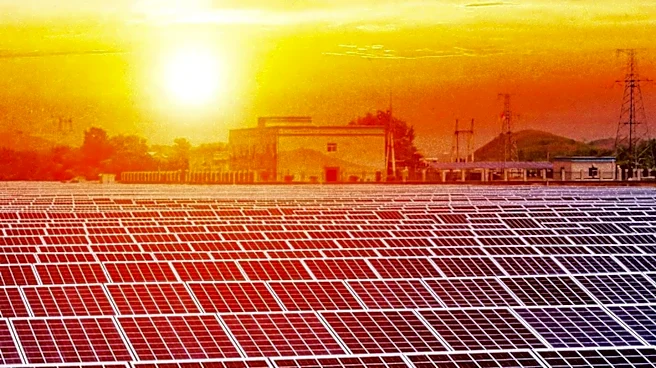
access to necessary technology, while China adopts an open-source approach to AI development, making its models widely accessible. Meanwhile, the 'triad of clean technologies'—solar energy, batteries, and electric vehicles—is emerging as a potential new economic paradigm, challenging the traditional reliance on fossil fuels.
Why It's Important?
The competition between the U.S. and China in AI and clean technology has significant implications for global economic and political dynamics. The U.S. seeks to protect its technological hegemony, while China's open-source strategy could democratize AI access and reduce costs, potentially shifting the balance of power. The rise of clean technologies addresses critical issues like climate change and energy independence, offering a sustainable alternative to fossil fuels. This shift could lead to significant economic and environmental benefits, influencing global energy policies and market dynamics.
What's Next?
The ongoing technological race between the U.S. and China is likely to intensify, with both nations investing heavily in AI and clean technologies. The U.S. may continue to implement policies to restrict China's access to critical technologies, while China could further its open-source initiatives to gain a competitive edge. The adoption of clean technologies is expected to accelerate, driven by economic incentives and environmental concerns. This could lead to a restructuring of global energy markets and a reevaluation of geopolitical alliances based on technological capabilities.
Beyond the Headlines
The shift towards clean technologies and AI has deeper implications for global economic structures and environmental policies. The transition from fossil fuels to renewable energy sources could alter the geopolitical landscape, reducing the influence of oil-rich nations and empowering those with technological prowess. The ethical considerations of AI, such as data privacy and job displacement, will also need to be addressed as these technologies become more integrated into society. The long-term impact of these developments could redefine economic power and societal norms.