


What's Happening?
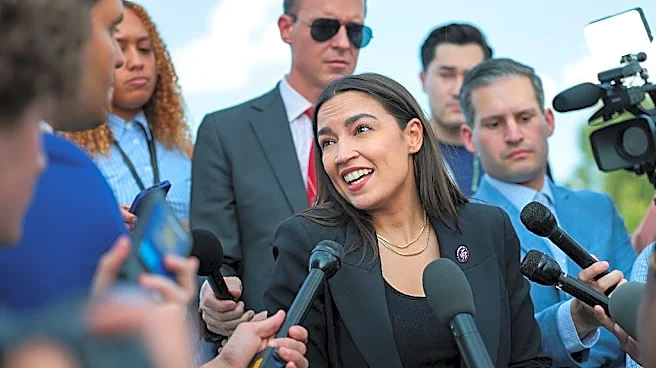
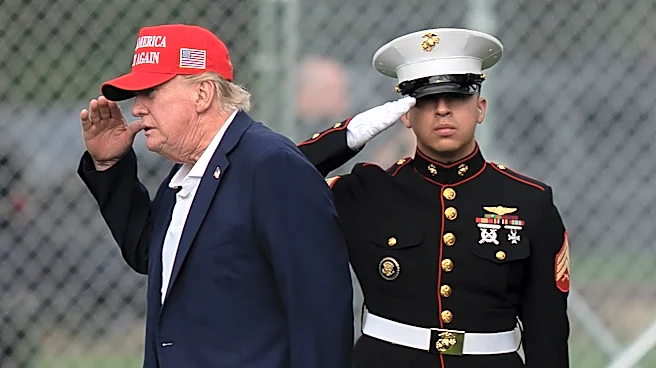
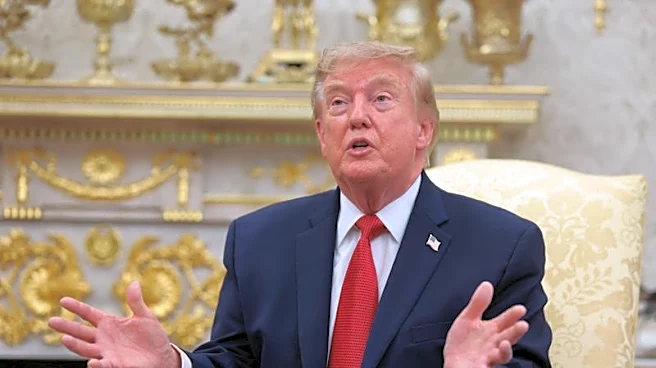
President Trump offered a prediction about the future of 'the woke' during an interview with Fox News' Alexis McAdams. The discussion centered on comments made by Rep. Alexandria Ocasio-Cortez (Democrat, New York), who had referenced a quip that 'Woke
1 was crazy' and distanced herself from some 'rhetoric' of the COVID-19 pandemic era, while still finding conversations around social issues 'fruitful.' President Trump interpreted Ocasio-Cortez's remarks as an attempt by Democrats to 'disavow' former 'wokeness' ahead of midterm elections, particularly concerning issues like crime. He asserted that 'the woke will become woke again, as soon as they get elected,' suggesting that any shift away from 'woke' ideologies by Democrats is merely a temporary political strategy. When asked if Ocasio-Cortez would run for president, President Trump swiftly replied, 'I think so.'
Why It's Important?
President Trump's comments highlight a significant cultural and political battleground in the U.S. – the concept of 'wokeness.' His prediction suggests a deep skepticism about any perceived moderation from progressive politicians, framing it as a cynical electoral tactic rather than a genuine ideological shift. This narrative reinforces a common conservative critique that 'woke' policies are extreme and out of touch with mainstream America, and that Democrats will revert to these positions once in power. This ongoing debate over 'wokeness' influences voter perception, shapes campaign messaging, and contributes to the broader polarization of American politics. It also underscores the strategic importance of cultural issues in political campaigns, often overshadowing policy specifics.
What's Next?
The 'woke' debate is likely to remain a central theme in upcoming political campaigns, with both sides using it to mobilize their bases and define their opponents. President Trump's prediction could encourage his supporters to view any moderate stances from Democrats with suspicion. Conversely, Democrats may continue to navigate how to address the 'woke' label, either by embracing certain aspects, redefining it, or actively distancing themselves from its more controversial connotations. The question of Rep. Ocasio-Cortez's potential presidential run, as speculated by President Trump, will also likely generate further discussion and media attention, influencing the dynamics within the Democratic party.
Beyond the Headlines
The term 'woke' has evolved from its origins in African American Vernacular English, signifying an awareness of social injustices, to a broader, often pejorative, label used in political discourse. President Trump's use of the term reflects its current political weaponization, where it is employed to criticize progressive ideas and policies, particularly those related to social justice, identity, and systemic inequality. This linguistic battle has deeper implications for how society discusses and addresses issues of race, gender, and equity. By framing 'wokeness' as an inherently negative and transient political phenomenon, President Trump contributes to a cultural divide that makes constructive dialogue on these complex social issues more challenging. The ongoing redefinition and deployment of such terms reveal the power of language in shaping political narratives and public understanding.