






What's Happening?
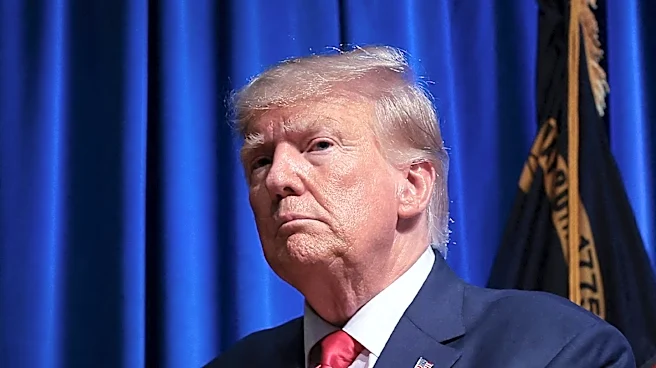
President Trump's national approval rating stands at 37% approval and 58% disapproval, resulting in a net approval rating of -21. This data, gathered from Civiqs' rolling online tracking poll, highlights significant disparities in state-level support.
While Trump maintains higher approval ratings in traditionally Republican states like Wyoming, where he has a net approval of +24, his ratings have declined in key battleground states. For instance, in Arizona, his net approval is -12, and in Georgia, it is -20. Even in Florida, a state that has leaned Republican, his net approval is -12. The lowest approval is in Vermont, with a net rating of -58. These figures suggest a challenging landscape for Republicans in the upcoming midterm elections.
Why It's Important?
The decline in President Trump's approval ratings, particularly in battleground states, could significantly impact the Republican Party's performance in the upcoming midterm elections. With control of Congress at stake, these ratings suggest potential gains for Democrats, especially in states where Trump's approval is notably low. The data also reflects broader demographic divides, with younger voters and minority groups showing strong disapproval. This trend could influence voter turnout and party strategies, potentially reshaping the political landscape in the U.S. as parties vie for control of legislative power.
What's Next?
As the midterm elections approach, both parties are likely to adjust their strategies based on these approval ratings. Republicans may focus on shoring up support in states where Trump's approval remains relatively high, while Democrats could target states with declining approval to gain seats. The outcome of these elections will determine the legislative agenda for the remainder of Trump's term, influencing policy decisions and political dynamics at the national level.