





What's Happening?
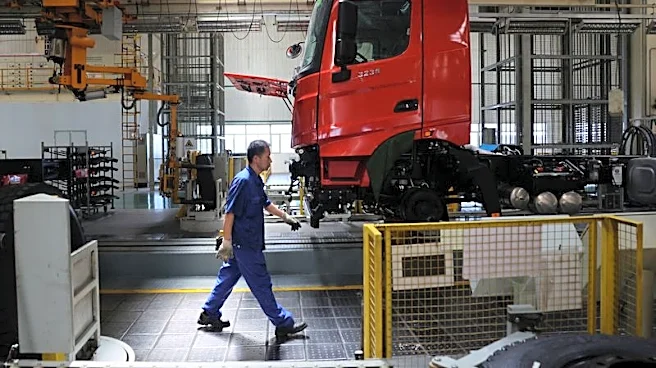
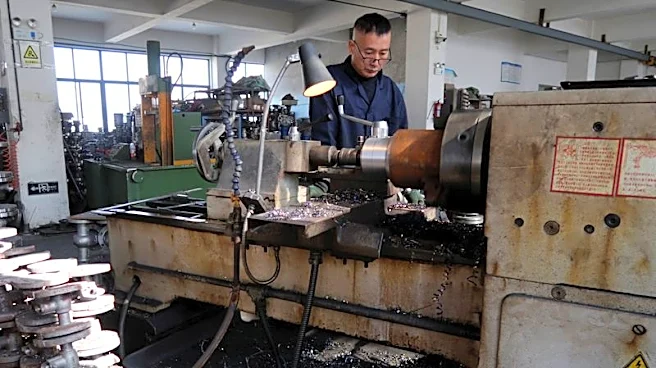
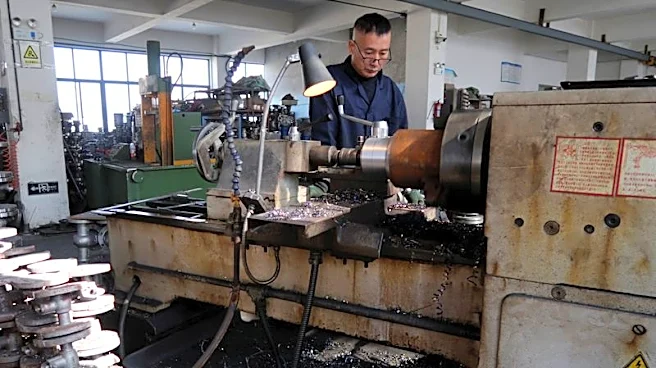
China's factory activity experienced a significant decline in July, as reported by the National Bureau of Statistics. The manufacturing purchasing managers' index (PMI) fell to 49.2, indicating contraction and missing the forecasted expansion of 50.1.
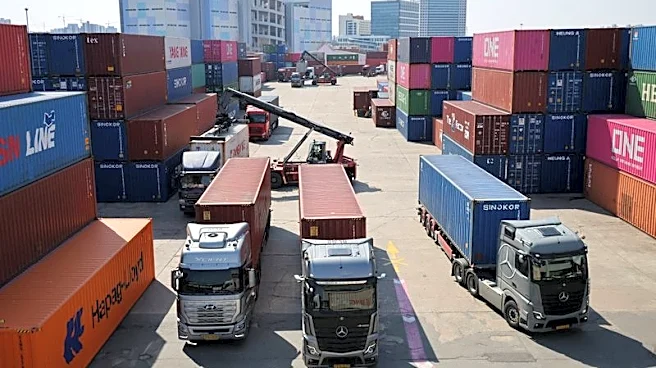
This downturn is attributed to the ongoing Middle East conflict, which has increased global energy prices, and weak domestic consumption. Despite strong export demand for electronics and AI hardware, the non-manufacturing PMI also fell sharply to 49.0, marking the most pronounced contraction in over three years. President Xi Jinping acknowledged the economic difficulties and emphasized the need to enhance macroeconomic policies and boost domestic demand.
Why It's Important?
The decline in China's factory activity is significant as it reflects broader economic challenges facing the world's second-largest economy. The contraction in both manufacturing and non-manufacturing sectors could impact global supply chains, particularly in electronics and AI hardware, where China plays a crucial role. The economic slowdown may also affect U.S. businesses reliant on Chinese manufacturing and exports. Additionally, the situation underscores the geopolitical tensions affecting global markets, with rising energy prices and trade uncertainties potentially influencing U.S. economic policies and international trade relations.
What's Next?
China's economic challenges may prompt further policy adjustments to stimulate domestic demand and stabilize the manufacturing sector. The Chinese government might implement measures to counteract the effects of global energy price increases and geopolitical tensions. Internationally, stakeholders will closely monitor China's economic policies and their impact on global trade dynamics. U.S. businesses and policymakers may need to reassess their strategies in response to potential disruptions in supply chains and trade relations with China.