






What's Happening?
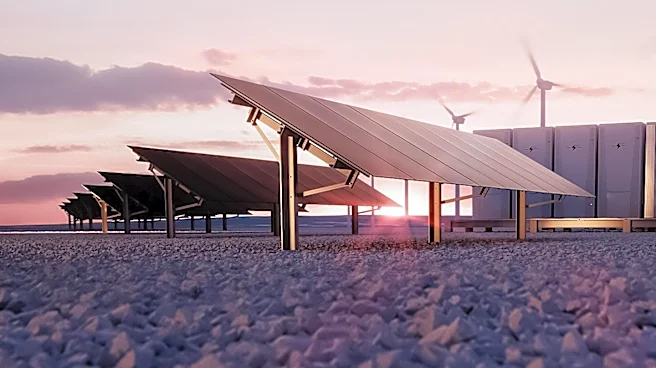
The Minnesota Department of Commerce is offering incentives to Minnesotans to expand solar energy storage, with over $1.4 million remaining in its Energy Storage Incentive Program. This program provides incentives of $250 per kilowatt-hour of battery
capacity, up to $7,000, for qualifying Minnesotans, including homeowners, businesses, government entities, and schools served by electric utilities outside Xcel Energy’s territory. Battery systems must be paired with solar installations and may not exceed 50 kilowatt-hours of capacity. Since 2024, Commerce has provided more than $600,000 in incentives through this program. In 2023, Minnesota lawmakers passed over 40 initiatives to reduce pollution and prepare communities for climate change, including a goal for 100 percent carbon-free electricity by 2040 and a $100 million investment in climate-resilient community infrastructure.
Why It's Important?
This incentive program is crucial for enhancing energy resilience and promoting clean energy adoption in Minnesota. By encouraging the pairing of battery storage with solar installations, the state aims to allow consumers to store electricity for later use, including during power outages, and potentially reduce their electric bills. This initiative supports Minnesota's broader goal of achieving 100 percent carbon-free electricity by 2040 and significantly reducing emissions, which have already decreased by 48% compared to 2005 levels. The program also helps to integrate more renewable energy into the power system, providing low-cost clean energy when it is most needed and reducing reliance on traditional energy sources. This move positions Minnesota as a leader in renewable energy adoption, with 55% of its electricity generation already coming from renewable and nuclear sources, surpassing the national average of 43%.
What's Next?
Minnesotans interested in the program should first identify their electric utility provider. Those outside Xcel Energy’s service territory are encouraged to consult with qualified solar or battery installers to determine suitable system options and check for additional rebates or rate programs from their utility. The funding is limited and available on a first-come, first-served basis, indicating a potential for rapid uptake. The Minnesota Department of Commerce will continue to administer the program, with information available on its Battery Energy Storage Incentives webpage. The success of this program could lead to further investments in energy storage and potentially influence other states to adopt similar incentive structures to accelerate their clean energy transitions. The state's ongoing commitment to climate initiatives suggests a sustained focus on expanding renewable energy infrastructure.
Beyond the Headlines
The Minnesota Department of Commerce's incentive program for solar energy storage highlights a growing recognition of the importance of energy storage in modernizing the electric grid. Beyond simply generating clean energy, the ability to store and dispatch it as needed addresses intermittency challenges inherent in renewables like solar. This not only provides backup power for individual consumers but also contributes to grid stability and efficiency by allowing for peak shaving and better management of electricity supply and demand. The program's focus on making battery storage more accessible, despite its significant investment cost, reflects a strategic effort to democratize access to advanced energy solutions. This could lead to a more decentralized and resilient energy system, empowering consumers and reducing the vulnerability of the grid to disruptions.