




What's Happening?
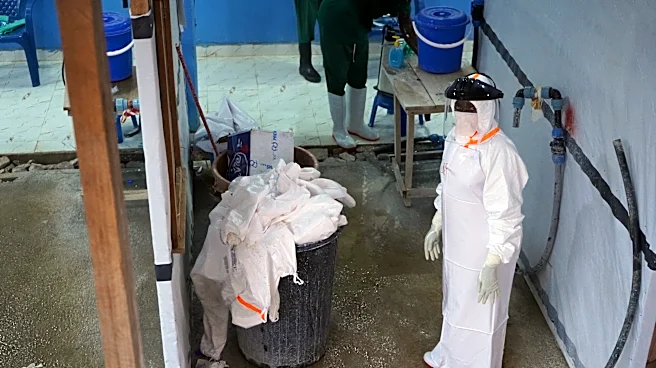
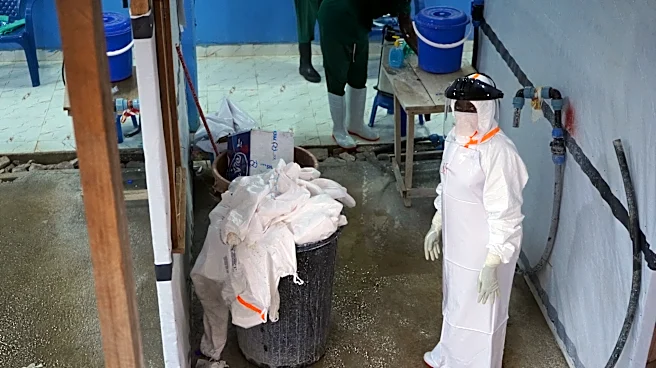
Health workers in the Democratic Republic of the Congo (DRC) are facing significant challenges as they combat a severe Ebola outbreak in the eastern region. The World Health Organization (WHO) has warned that this outbreak could be one of the world's
worst, with over 2,500 cases and 1,000 deaths reported by July 21. The outbreak is exacerbated by the presence of the rare Bundibugyo strain, which lacks approved treatments or vaccines. Health workers are dealing with a shortage of personal protective equipment, the risk of infection, and hostility from communities that distrust authorities and deny the existence of the virus. Many health workers have not been paid since the outbreak was declared in May, leading to strikes and further complicating the response efforts. The epicenter of the outbreak is Ituri province, near the Ugandan border, an area already affected by conflict and instability.
Why It's Important?
The situation in the DRC highlights the critical need for international support and resources to address public health crises effectively. The lack of payment and resources for health workers not only hampers the immediate response to the Ebola outbreak but also undermines long-term efforts to build trust and cooperation with local communities. The outbreak poses a significant threat to regional stability, with potential cross-border implications, as seen with cases reported in Uganda. The challenges faced by health workers underscore the importance of ensuring adequate funding, protective equipment, and support for those on the front lines of public health emergencies. The international community's response will be crucial in containing the outbreak and preventing further loss of life.
What's Next?
Efforts to contain the Ebola outbreak will require increased international aid and coordination to provide necessary resources and support to health workers. The DRC government and international partners must address the issue of unpaid salaries to ensure that health workers can continue their vital work without financial hardship. Building trust with local communities will be essential to improving disease surveillance and encouraging individuals to seek medical help. The WHO and other health organizations will likely continue to monitor the situation closely and provide updates on the outbreak's progression and response efforts.