









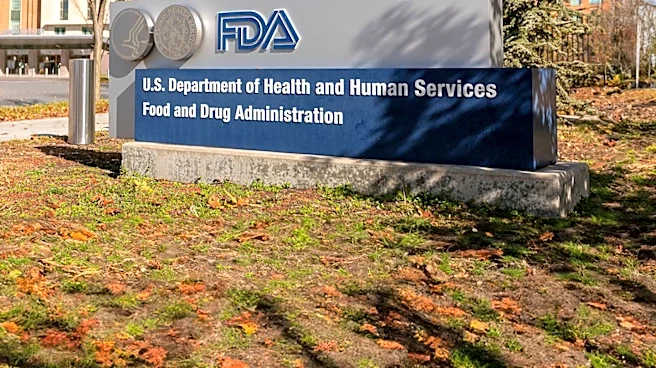


What's Happening?
In the first half of 2026, the Food and Drug Administration (FDA) approved 26 novel therapies, marking an increase from the previous year. Despite facing leadership instability and workforce attrition, the FDA managed to maintain its regulatory productivity.
The approvals included four new cancer treatments and six therapies for rare diseases. AstraZeneca and Johnson & Johnson were notable recipients, securing a combined 11 approvals. The FDA's focus on oncology and rare diseases reflects ongoing efforts to address critical health challenges.
Why It's Important?
The FDA's ability to approve a significant number of novel therapies despite internal challenges is crucial for advancing medical treatments and addressing unmet health needs. The approvals for cancer and rare disease therapies highlight the agency's commitment to supporting innovative solutions for complex medical conditions. This progress is vital for patients who rely on new treatments for improved health outcomes. The pharmaceutical industry benefits from these approvals as they drive research and development efforts, potentially leading to more breakthroughs in the future.
What's Next?
As the FDA continues to navigate leadership changes and workforce challenges, it will be important for the agency to maintain its focus on regulatory efficiency and innovation. The pharmaceutical industry will likely monitor the FDA's actions closely, as future approvals could impact market dynamics and investment strategies. Continued collaboration between the FDA and pharmaceutical companies will be essential to ensure that new therapies reach patients in a timely manner.