
What's Happening?
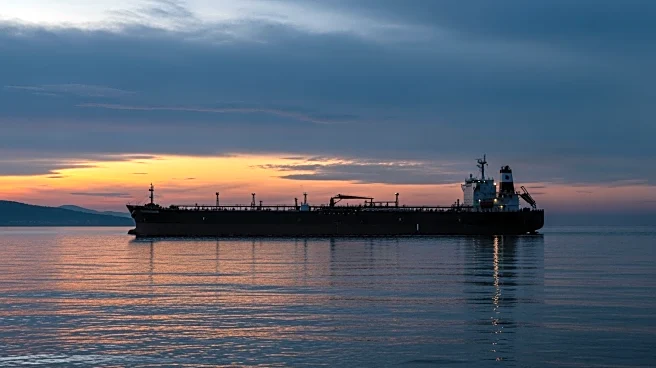
The United States has seized the oil supertanker Skipper near Venezuela as part of its intensified pressure campaign against President Nicolás Maduro's regime. The tanker, carrying approximately 1.85 million
barrels of Venezuela's Merey heavy crude, is en route to Houston. Due to its size, the vessel will anchor near the port and transfer its cargo to smaller ships. This action follows a seizure warrant issued by U.S. Attorney General Pam Bondi. The tanker was reportedly flying a false Guyanese flag, according to Guyana's maritime authority. The U.S. aims to intercept more vessels transporting Venezuelan oil, further escalating tensions between Washington and Caracas.
Why It's Important?
This seizure marks a significant escalation in the U.S.'s efforts to pressure the Venezuelan government, which could have broad implications for international oil markets and geopolitical relations. By targeting Venezuela's oil exports, the U.S. seeks to undermine a critical revenue source for the Maduro regime, potentially destabilizing the country's economy further. This move also signals a strong stance by the U.S. against countries and entities that continue to engage in oil trade with Venezuela, despite existing sanctions. The action could lead to increased diplomatic tensions and impact global oil supply chains, affecting prices and availability.
What's Next?
The U.S. is expected to continue its strategy of intercepting vessels carrying Venezuelan oil, which may provoke retaliatory measures from the Maduro government. This could lead to further diplomatic confrontations and potential disruptions in oil trade routes. The international community, particularly countries with vested interests in Venezuelan oil, may respond with diplomatic efforts to mediate the situation. Additionally, the U.S. may face legal challenges or diplomatic pushback from countries whose flags are falsely used by intercepted vessels.