





What's Happening?
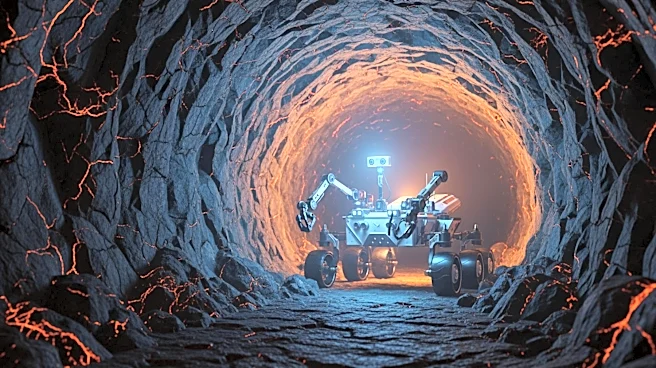
NASA's Curiosity rover has provided new insights into the ancient climate of Mars through the study of mineralogical markers. By analyzing the size and structure of hematite crystallites in samples from Gale Crater, scientists have been able to infer
past environmental conditions on Mars. The study found that warm groundwater may have persisted in the crater for up to 4.7 million years, suggesting that these conditions could have supported habitable environments. The research highlights the role of iron oxides as indicators of water activity and climate changes on Mars.
Why It's Important?
This discovery is significant as it enhances our understanding of Mars' climatic history and its potential to have supported life. The findings could influence future Mars exploration missions and the search for past life on the planet. Understanding the conditions that allowed for habitable environments on Mars can also provide insights into the planet's geological and hydrological history, which is crucial for planning future human exploration. The study demonstrates the value of in-situ analysis by rovers in uncovering the planet's past.
What's Next?
The results from Curiosity's analysis will likely guide future missions to Mars, focusing on areas that may have been habitable. NASA and other space agencies may prioritize the exploration of regions with similar mineralogical markers. Continued study of the data collected by Curiosity and other rovers will help refine our understanding of Mars' climate history and its implications for astrobiology. The findings may also inform the development of new technologies for detecting signs of past life on Mars.