
What's Happening?
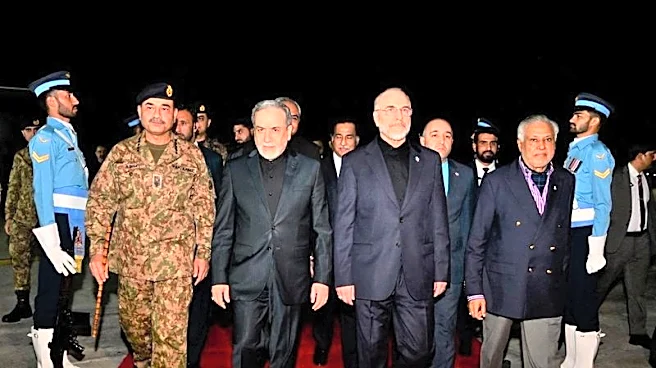
Negotiations between the United States and Iran have paused after a series of talks in Islamabad, Pakistan, aimed at ending a six-week conflict. These discussions marked the first direct meeting between the two
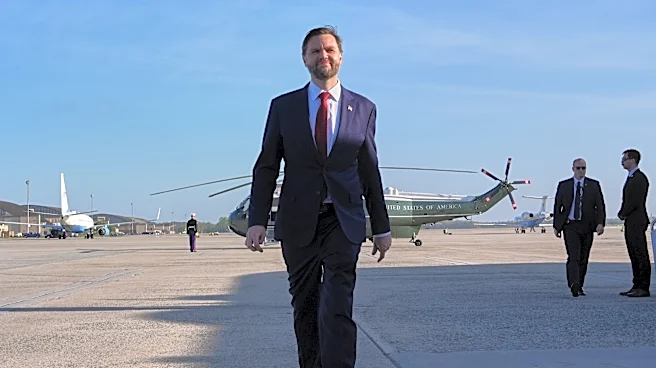
nations in over a decade. The talks, which involved U.S. Vice President JD Vance, special envoy Steve Witkoff, and President Trump's son-in-law Jared Kushner, focused on resolving issues related to a fragile ceasefire and the reopening of the Strait of Hormuz. This strategic waterway, crucial for global energy supplies, has been blocked by Iran since the conflict began, leading to soaring oil prices and significant casualties. Despite 14 hours of discussions, key disagreements remain unresolved, particularly concerning the release of frozen Iranian assets and control over the Strait of Hormuz.
Why It's Important?
The outcome of these negotiations holds significant implications for global energy markets and regional stability. The Strait of Hormuz is a vital chokepoint for about 20% of the world's oil supply, and its closure has disrupted global oil prices. The talks also address broader geopolitical tensions, including Iran's demands for control over the strait and war reparations, as well as U.S. objectives to ensure free passage for shipping and curb Iran's nuclear capabilities. The involvement of high-level U.S. officials underscores the importance of these talks in shaping future U.S.-Iran relations and potentially easing tensions in the Middle East.
What's Next?
While the talks have paused, technical teams from both sides are expected to continue exchanging documents. The timing for the resumption of negotiations remains uncertain. The U.S. military has indicated plans to clear the Strait of Hormuz, a move that could escalate tensions if not coordinated with Iran. Additionally, the release of frozen Iranian assets remains a contentious issue, with conflicting reports about U.S. commitments. The international community will be closely monitoring these developments, as any progress or setbacks could have far-reaching consequences for regional security and global energy markets.