


What's Happening?
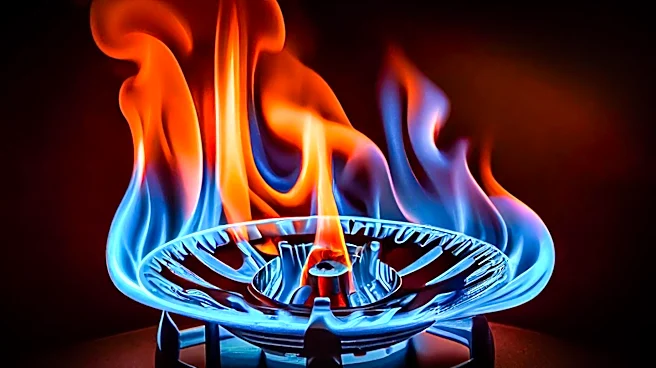
Subcommittee on Economic Growth, Energy Policy, and Regulatory Affairs Chairman Eric Burlison (R-Mo.) delivered opening remarks at a hearing titled “No Flame, More Pain: How State and Local Bans on Natural Gas Increase Costs.” Chairman Burlison argued
that state and local bans on natural gas, often championed by Congressional Democrats and pursued by "blue states and localities," are driving up energy costs for American households. He highlighted that while electricity prices have "skyrocketed" since 2020, natural gas has remained an affordable and reliable energy source. Burlison contended that these bans not only increase energy prices in the enacting states but also elevate demand on neighboring electricity grids, leading to higher prices in other states. He also stated that such bans limit appliance choice, make housing construction more expensive, and disproportionately affect struggling families, particularly poor families.
Why It's Important?
This hearing underscores a significant policy debate regarding energy choice, affordability, and environmental regulations in the United States. Chairman Burlison's remarks emphasize the economic impact of transitioning away from natural gas, particularly for consumers already facing high electricity costs. The argument that natural gas bans contribute to an "existing home affordability crisis" and increase housing construction costs highlights a potential conflict between climate goals and economic realities for many Americans. The discussion also touches upon the broader implications for the national energy grid, suggesting that localized bans can have ripple effects across regional transmission organizations. This issue is particularly relevant as states and localities increasingly adopt policies aimed at reducing fossil fuel reliance, prompting a federal-level examination of their consequences.
What's Next?
The hearing serves as a platform for Congressional Republicans to scrutinize policies that promote electrification and restrict natural gas use. Chairman Burlison indicated that the Trump Administration is actively working to roll back appliance standards and regulations that aim to eliminate fossil fuel-fired power generation. He urged Congress to take action against these state and local bans, which he described as a "national workaround dressed in local clothing." The ongoing litigation surrounding these bans, including a Ninth Circuit ruling that federal law preempts state building code restrictions on energy sources, suggests that legal challenges will continue to shape the landscape of energy policy. The subcommittee's findings and discussions could influence future legislative efforts at both federal and state levels regarding energy choice, appliance regulations, and infrastructure development.
Beyond the Headlines
The debate over natural gas bans extends beyond immediate energy costs, touching upon fundamental questions of federalism, consumer freedom, and environmental policy. Chairman Burlison's assertion that these policies are driven by "radical climate activists" and represent a coordinated effort to impose mandates at the federal level speaks to the ideological divisions surrounding climate action. The argument for "energy choice" and "appliance freedom" frames the issue as one of individual liberty versus government intervention. Furthermore, the potential for increased electricity demand to strain an already "stretched power grid" raises concerns about energy reliability and security, especially during peak demand periods like winter. This discussion highlights the complex interplay between energy sources, infrastructure, regulatory frameworks, and their societal and economic consequences.