



What's Happening?
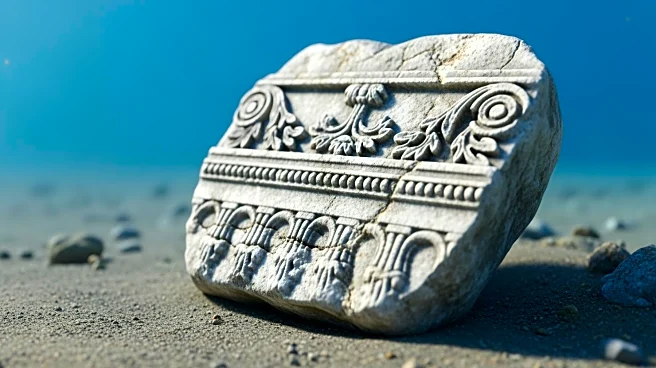
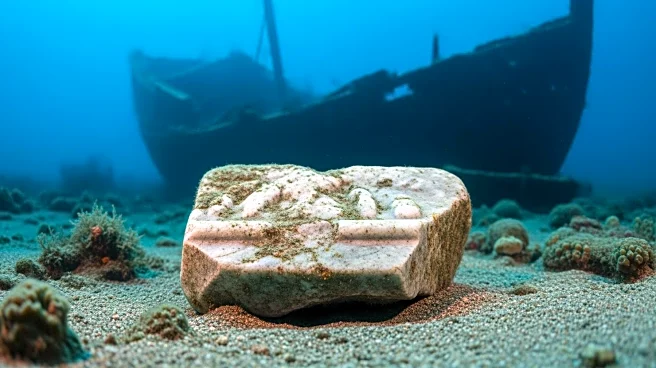
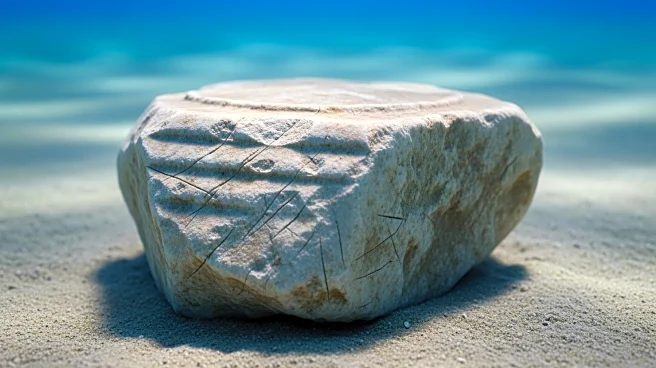
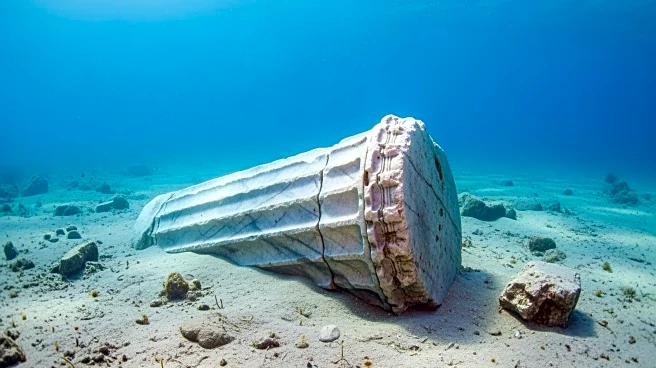
Archaeologists have uncovered a marble slab at the site of the Mentor shipwreck off the coast of Kythira, Greece. The slab is believed to be part of the artifacts taken from the Parthenon by Lord Elgin in the early 1800s. The Mentor sank in 1802 while
transporting these relics from Greece to Britain. The marble fragment, described as decorative, features a sculptural element resembling a water droplet, characteristic of the Parthenon's architectural style. The discovery adds to the ongoing controversy surrounding the 'Elgin Marbles,' which Greece has sought to recover from various museums where they ended up after being taken by Elgin, who claimed he had permission from the Ottoman Empire rulers at the time.
Why It's Important?
The discovery of the marble slab at the Mentor shipwreck site highlights the historical and cultural significance of the artifacts taken from the Parthenon. It reignites the debate over the rightful ownership of the 'Elgin Marbles,' which Greece has long argued were looted. The find could bolster Greece's claims and efforts to recover these cultural treasures, emphasizing the importance of preserving historical artifacts within their original context. The situation also underscores broader issues of cultural heritage and the ethics of artifact acquisition, which continue to be relevant in international discussions about museum collections and repatriation.
What's Next?
Further conservation efforts and research at the Mentor shipwreck site are expected to provide more insights into the origins of the marble fragment. This could potentially strengthen Greece's case for the return of the 'Elgin Marbles.' The ongoing debate may lead to increased diplomatic discussions between Greece and the UK, where many of the marbles are currently housed. Additionally, the discovery may prompt other countries to reassess their own collections and the provenance of artifacts, potentially leading to more repatriation efforts globally.