
What's Happening?
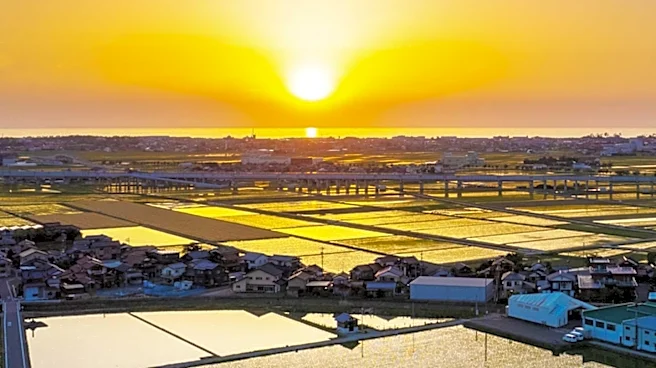
Japan is increasingly turning to its extensive rice paddy fields as a key component of its flood mitigation strategy, particularly in response to a rise in heavy rainfall events attributed to climate change.
Communities like Osaki, an agricultural area in northeast Japan that has experienced significant flooding in 2015, 2019, and 2022, are implementing 'green infrastructure' solutions. Farmers and local governments in Osaki have installed over 5,000 small earthen dams within rice paddies to help retain excess water and prevent river embankments from breaching. This approach leverages the natural capacity of rice paddies to temporarily store and absorb water, thereby delaying water inflow into irrigation canals and rivers and reducing peak flows that can lead to flooding. The Japan Meteorological Agency has noted an increase in the frequency and intensity of climate change-fueled heavy rainfall across the country, prompting a reevaluation of traditional 'gray infrastructure' like concrete dams and levees.
Why It's Important?
The shift towards utilizing rice paddies for flood control signifies a crucial adaptation strategy for Japan in the face of escalating climate change impacts. This approach not only addresses immediate flood risks but also highlights the multi-functional value of agricultural landscapes beyond food production. By integrating natural systems into disaster management, Japan aims to build more resilient communities and infrastructure. The initiative also underscores the growing recognition that conventional engineering solutions alone may be insufficient to combat the severity of modern weather patterns. Furthermore, maintaining and enhancing rice paddies for flood mitigation can offer co-benefits, such as preserving biodiversity, as these artificial wetland habitats support an estimated 5,000 species. This strategy could serve as a model for other nations grappling with similar climate-induced challenges, demonstrating how agricultural land can be repurposed to provide essential ecosystem services.
What's Next?
Japanese officials and researchers are expected to continue expanding and refining the use of rice paddies for flood mitigation. This includes further implementation of paddy dams and the development of watershed-level approaches to flood prevention, as seen in Shiga Prefecture, a pioneer in this area. There will likely be ongoing assessments of the flood mitigation potential of both active and abandoned agricultural lands, emphasizing site-specific conditions and local countermeasures. As climate change continues to drive more extreme weather events, the integration of green infrastructure into national disaster preparedness plans will become increasingly critical. Future efforts may also focus on incentivizing farmers to participate in these initiatives and exploring how these practices can be sustained amidst a declining agricultural sector and an aging farming population.
Beyond the Headlines
Beyond the immediate benefits of flood control, Japan's embrace of rice paddy-based solutions reflects a deeper philosophical shift towards living with nature rather than solely attempting to control it. This approach acknowledges the intricate relationship between human activity, agricultural practices, and environmental resilience. It also brings to light the economic and social challenges of maintaining agricultural land in a country with a shrinking rural population and an aging farmer demographic. The success of these initiatives will depend on effective collaboration between local communities, farmers, and government bodies, highlighting the importance of participatory governance in climate adaptation. Moreover, the dual role of rice paddies in food security and disaster mitigation could elevate their perceived value, potentially influencing land-use policies and conservation efforts in the long term.