
What's Happening?
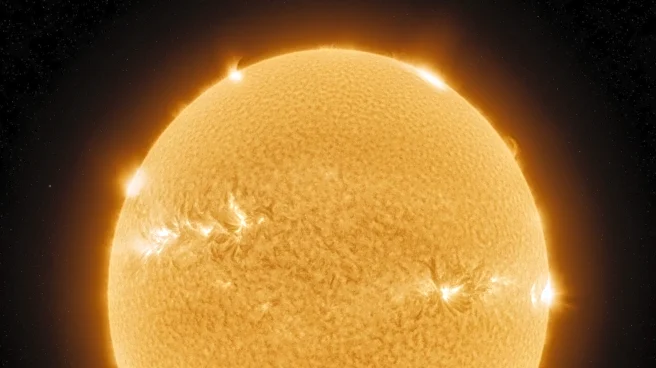
The sun has recently experienced its first 'spotless days' in over four years, with no visible sunspots on its Earth-facing side as of February 22, 2026. This phenomenon marks the end of a 1,335-day streak of continuous sunspot activity. Sunspots are
regions of magnetic instability on the sun's surface, and their absence typically indicates a period of reduced solar activity. However, experts caution that this does not mean the threat of solar storms has diminished. The sunspots reappeared shortly after, suggesting that solar activity is still ongoing. This development comes after a period of heightened solar activity, including a major solar radiation event and explosive sunspots earlier in the current solar cycle, known as Solar Cycle 25.
Why It's Important?
The occurrence of spotless days on the sun is significant as it signals a potential decline in solar activity, which can impact space weather and, consequently, Earth's technological infrastructure. Solar storms, which can be triggered by sunspots, have the potential to disrupt satellite operations, GPS systems, and power grids. The recent spotless days suggest a waning phase in Solar Cycle 25, but experts warn that the cycle is not yet over, and the risk of solar storms remains. Understanding and monitoring solar activity is crucial for preparing and mitigating the effects of space weather on modern technology and communication systems.
What's Next?
As Solar Cycle 25 continues, scientists will closely monitor the sun for further developments in solar activity. The reappearance of sunspots indicates that the cycle is still active, and the potential for solar storms persists. Researchers will focus on predicting and understanding the behavior of sunspots and their impact on space weather. The possibility of a significant solar storm, similar to the Carrington Event of 1859, remains a concern, with studies suggesting a 5% chance of such an event occurring in the next decade. Continued observation and research are essential to anticipate and respond to potential disruptions caused by solar activity.
Beyond the Headlines
The spotless days on the sun highlight the complex and dynamic nature of solar cycles. While the absence of sunspots may seem like a period of calm, it underscores the unpredictable nature of solar activity. The magnetic configuration of sunspots, rather than their size or frequency, determines the risk of solar storms. This complexity requires ongoing research and technological advancements in solar observation to better predict and understand the sun's behavior. The potential for large geomagnetic storms in the coming years emphasizes the need for preparedness and resilience in the face of space weather challenges.