





What's Happening?
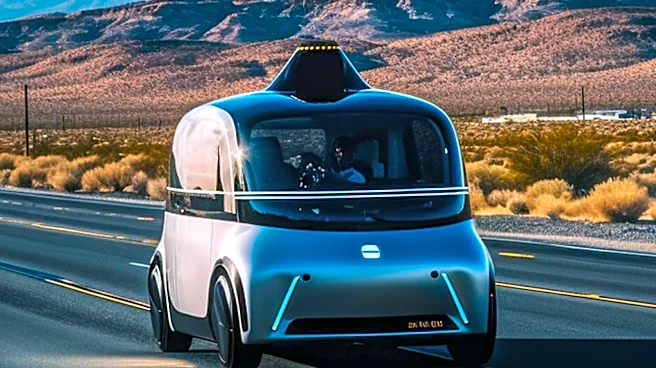
A Zoox robotaxi was involved in a crash with another vehicle on the Las Vegas Strip. The incident occurred on a Friday morning, and while there were no passengers in the robotaxi at the time, authorities are investigating the circumstances. Zoox has acknowledged
the crash and stated they are looking into the details leading up to and following the impact. Brendan Morris, a UNLV professor specializing in autonomous vehicles, noted that a crash alone does not fully explain what went wrong, as many factors contribute to both autonomous and human-involved collisions. Remnants of an impact were visible at the intersection of Las Vegas Boulevard and Four Seasons, though the Zoox vehicle reportedly showed minimal external damage.
Why It's Important?
This incident raises critical questions about the safety and reliability of driverless technology, particularly as autonomous vehicles become more prevalent on public roads. The ability of these vehicles to detect and respond to unexpected situations, especially when interacting with unpredictable human drivers, is a key concern. Professor Morris highlighted that autonomous vehicles use various sensors, including cameras and lidar, to create a three-dimensional understanding of their surroundings and plan their movements. However, the challenge lies in how well the technology can anticipate and react to unforeseen human behaviors. The continuous collection of data by autonomous vehicles is crucial for understanding crash dynamics, as it can provide insights into what the robotaxi detected and how it reacted before impact.
What's Next?
Zoox is expected to conduct a thorough investigation into the crash, analyzing the data collected by the robotaxi's sensors to determine the sequence of events and the cause. This data will be vital in understanding the vehicle's perception and decision-making processes leading up to the collision. The findings from this investigation could influence future developments in autonomous vehicle technology and regulatory frameworks. Professor Morris also suggested that driverless vehicles might be programmed to pause or pull over if they encounter situations they cannot immediately resolve, indicating a potential operational protocol for such incidents. The broader implications for public trust and the adoption of robotaxis will depend on the transparency and outcomes of such investigations.
Beyond the Headlines
The crash underscores the complex ethical and legal dimensions surrounding autonomous vehicle accidents. Determining liability in such incidents can be challenging, as it involves assessing the performance of advanced AI systems, sensor data, and the actions of human drivers. Beyond the immediate cause, this event contributes to the ongoing public discourse about the balance between technological innovation and public safety. It also highlights the need for robust testing and validation protocols for autonomous vehicles, especially in dynamic and unpredictable urban environments like the Las Vegas Strip. The incident could also prompt further discussions on the regulatory landscape for driverless cars, potentially leading to updated standards or guidelines to ensure safer integration of these technologies into daily life.