









What's Happening?
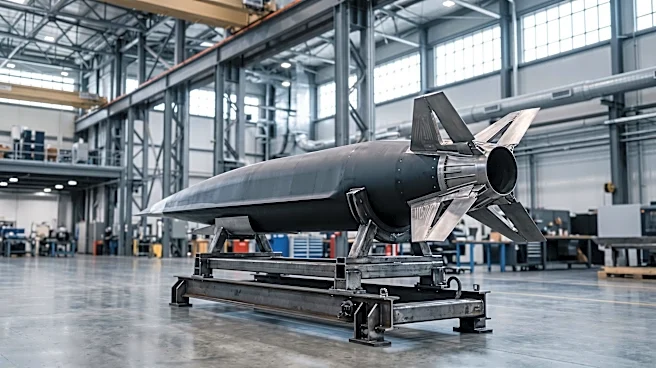
Lockheed Martin has been awarded a $694 million contract by the U.S. Air Force for the production of the Air-Launched Rapid Response Weapon (ARRW). This contract signifies a major step in integrating sustained and maneuverable hypersonic capabilities
into the U.S. military's arsenal, following years of collaborative development and testing between Lockheed Martin and the Air Force. In anticipation of this production, Lockheed Martin has already initiated an expansion of its Building P-20 facility in Troy, Alabama. This expansion will add 47,000 square feet of production space, effectively tripling the current capacity for ARRW manufacturing. The company's investment in this expansion, totaling $67 million, was made prior to receiving government funding, demonstrating its commitment to the program. The facility upgrade is expected to create new American jobs over the next four years and will incorporate advanced manufacturing, robotics, and digital technologies to streamline production.
Why It's Important?
The production of the ARRW is critical for enhancing the U.S. Air Force's strategic advantage and addressing emerging threats. This hypersonic missile, designed to travel at speeds exceeding Mach 5, offers a high-precision, sustained strike capability that can rapidly engage targets from significant standoff ranges. Its ability to operate in extreme environments, utilizing advanced materials for heat management and sophisticated technology for accuracy, makes it a formidable asset against a wide range of defenses. The integration of ARRW onto the B-52 bomber provides a rapidly deployable hypersonic strike option. From an economic perspective, Lockheed Martin's facility expansion in Alabama will generate new jobs and foster advancements in manufacturing technology, contributing to the local economy and strengthening the domestic defense industrial base. This initiative also underscores the U.S.'s commitment to maintaining technological superiority in defense, particularly in the realm of hypersonic weaponry.
What's Next?
With the production contract secured and facility expansion underway, Lockheed Martin will proceed with scaling up the manufacturing of the ARRW. The company's ongoing research and development efforts will continue to ensure long-term support and rapid delivery of this critical capability to the U.S. Air Force. The expanded facility in Troy, Alabama, will become a hub for advanced manufacturing, robotics, and digital technologies, preparing a specialized workforce for ARRW production. The successful deployment and integration of ARRW into the U.S. Air Force's operations will likely lead to further advancements in hypersonic technology and potentially influence future defense procurement strategies. This development also positions Lockheed Martin as a key player in the evolving landscape of hypersonic strike capabilities, potentially leading to more contracts and partnerships in the future.
Beyond the Headlines
The development and production of the ARRW signify a broader shift in military strategy towards advanced, high-speed weaponry. Hypersonic missiles like ARRW represent a significant leap in military technology, potentially altering the dynamics of modern warfare by offering unprecedented speed and precision. This capability could challenge existing defense systems and necessitate new approaches to national security. The substantial investment by Lockheed Martin, even before government funding, highlights the strategic importance and perceived necessity of such advanced weapon systems. Furthermore, the focus on domestic production and job creation through facility expansion underscores the intersection of national security interests with economic development. This move also reinforces the U.S.'s commitment to maintaining a technological edge in defense, which could have long-term implications for international arms control and geopolitical stability as other nations strive to develop similar capabilities.