




What's Happening?
The U.S. National Science Foundation (NSF) Daniel K. Inouye Solar Telescope is actively expanding its research community through its Ambassadors Program. This initiative, run by the NSF National Solar Observatory (NSO), is a graduate research and workforce
development program designed to train emerging solar physicists in using the telescope’s data, developing observing programs, and conducting research under the mentorship of experts. The program, which began in 2019 and became part of the Inouye in 2022 through supplemental funding, aims to create a network of Inouye data experts at U.S. universities. Participants receive two years of support, including travel and publication funds, and engage in training activities such as data workshops, summer schools, and hands-on 'inversion weeks' focused on specialized analysis techniques. The program has seen its first cohort members move into postdoctoral and research positions, with several publishing papers using Inouye data. The third cohort began in October 2026, and the plan is to hold annual calls for new cohorts moving forward.
Why It's Important?
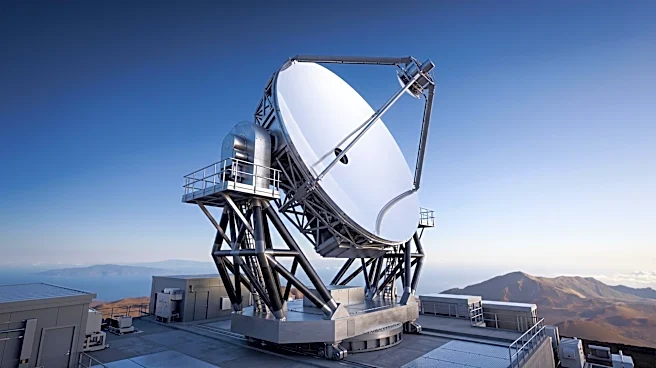
The Inouye Solar Telescope is the world’s most powerful solar telescope, offering an unprecedented view of the Sun. However, its impact is directly tied to the scientific community's ability to effectively utilize its data. The Ambassadors Program is crucial for building this expertise, ensuring that the advanced capabilities of the telescope translate into significant scientific discoveries. By training the next generation of solar physicists, the program addresses a critical need for skilled researchers who can formulate compelling observations, work with sophisticated datasets, and collaborate across institutions. This initiative not only fosters individual career development but also strengthens the broader U.S. solar physics community, enabling it to lead innovative research and contribute to a deeper understanding of solar phenomena. The program's success in placing alumni in key research roles demonstrates its effectiveness in preparing scientists for data-driven research, which is vital for advancing U.S. leadership in scientific exploration.
What's Next?
The Ambassadors Program is now solidified as an annual mechanism for expanding expertise across the solar physics research community, with new cohorts expected to be selected annually. The current cohort, which started in October 2026, includes students working with mentors at institutions such as NJIT, NMSU, the University of Hawai‘i, GMU, and the University of Colorado Boulder. Future training programs will continue to include online data tutorials, summer schools, and support for observing-proposal preparation, along with participation in the George Ellery Hale COLLAGE graduate program. A clear illustration of the program's impact is the upcoming 'Flare Month' from September 10 to October 9, 2026, where Ambassadors are key members of a working group identifying scientific priorities and developing observing strategies. This ongoing development ensures a continuous pipeline of skilled researchers capable of maximizing the scientific output of the Inouye Solar Telescope.
Beyond the Headlines
The Inouye Solar Telescope Ambassadors Program represents a strategic investment in human capital, recognizing that even the most advanced scientific instruments require a highly skilled and collaborative community to realize their full potential. This model of integrated training, mentorship, and community building could serve as a blueprint for other large-scale scientific facilities, both within the U.S. and internationally. The program's emphasis on developing expertise in data analysis and observation design highlights the evolving nature of scientific research, where computational skills and interdisciplinary collaboration are increasingly paramount. Furthermore, by fostering a diverse network of researchers, the program contributes to a more inclusive scientific enterprise, ensuring that a wider range of perspectives and talents are brought to bear on complex scientific challenges. This long-term investment in people is essential for sustaining scientific innovation and maintaining the U.S.'s competitive edge in global research.