






What's Happening?
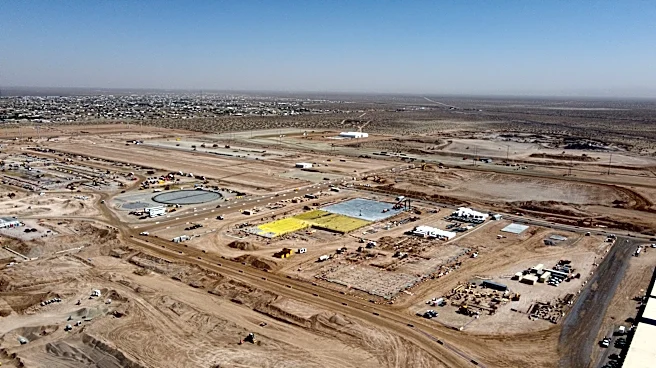
In Texas, the expansion of artificial intelligence data centers is raising concerns among farmers and ranchers about water usage. These centers, which can consume up to 5 million gallons of water daily for cooling, are being developed in areas where groundwater
is already limited. John Duff from Sero Ag Strategies highlights the potential pressure on local water supplies, especially in regions where agriculture heavily relies on irrigation. While agriculture uses more water overall, the concentrated demand from data centers could exacerbate local water scarcity. The introduction of closed-loop cooling systems is suggested as a way to mitigate water consumption, providing rural communities with leverage through local water policies.
Why It's Important?
The expansion of data centers in rural Texas could significantly impact local agriculture by increasing competition for already scarce water resources. This development is crucial as it may lead to higher operational costs for farmers, who might face water shortages for their crops. The situation underscores the need for strategic water management and policy-making to balance industrial growth with agricultural sustainability. The potential strain on water resources could also affect the economic viability of farming in these regions, leading to broader implications for food production and rural economies.
What's Next?
As data centers continue to expand, local governments and communities will need to engage in discussions about water allocation and management. Farmers and ranchers are encouraged to participate in local water policy decisions to ensure their needs are considered. The adoption of technologies like closed-loop cooling systems could be a critical step in reducing water usage. Additionally, monitoring electricity costs will be essential as new facilities increase demand on the power grid. The outcome of these developments will depend on the effectiveness of local policies and the willingness of stakeholders to collaborate on sustainable solutions.