





What's Happening?
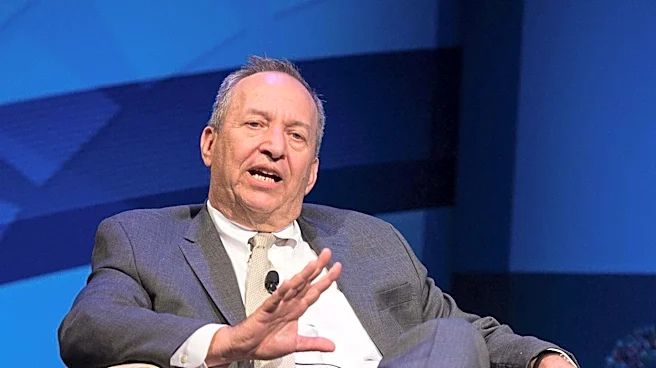
Lawrence Summers has had a distinguished career spanning academia, public service, and economic policy. Prior to becoming President of Harvard University, Summers served as the United States Secretary of the Treasury under President Bill Clinton. His
tenure as Secretary of the Treasury saw a significant paying down of the national debt, efforts to reform the International Monetary Fund, and advocacy for debt relief for the world's poorest nations. Before this, he was the chief economist of the World Bank and served as Undersecretary of the Treasury for International Affairs. Summers was also the youngest tenured professor in Harvard's modern history and the first social scientist to receive the Waterman Prize of the National Science Foundation. More recently, he served in President Barack Obama's administration as Director of the National Economic Council and Assistant to the President for Economic Policy, where he was responsible for coordinating U.S. domestic and international economic policy. His career highlights his consistent involvement in high-level economic and policy-making roles.
Why It's Important?
Lawrence Summers' extensive career in economic policy and public service holds significant importance for the U.S. and global economic landscape. His role as Secretary of the Treasury during a period of national debt reduction demonstrates his influence on fiscal policy. His advocacy for International Monetary Fund reform and debt relief for developing countries highlights his impact on global economic stability and humanitarian efforts. As Director of the National Economic Council, Summers played a crucial role in shaping the economic policies of the Obama administration, which had far-reaching effects on U.S. industries, employment, and financial markets during a critical period. His academic background and recognition with the Waterman Prize underscore his intellectual contributions to economic thought, which often inform policy decisions. His career trajectory illustrates the interconnectedness of academic expertise, government service, and international economic relations, influencing how the U.S. navigates its economic challenges and opportunities.
What's Next?
While the provided text details Summers' past roles, it does not specify his current or immediate future engagements. However, individuals with his extensive background in economic policy and public service often continue to contribute through advisory roles, academic positions, or public commentary. His insights are frequently sought after in discussions concerning economic trends, fiscal policy, and global financial stability. Given his history of involvement in both Democratic and Republican administrations, Summers remains a prominent voice in U.S. economic discourse. Future contributions could involve advising government bodies, participating in international economic forums, or shaping public opinion through publications and media appearances, continuing to influence policy discussions and economic strategies.
Beyond the Headlines
Lawrence Summers' career also sheds light on the evolving role of economists in public life. His transition from a distinguished academic to a key policy-maker and then back to academia, with subsequent returns to government, exemplifies the fluid boundary between theoretical economic understanding and practical policy implementation. His experience underscores the challenges and opportunities inherent in translating complex economic theories into actionable government policies that affect millions. The recognition he received, such as the Waterman Prize, highlights the value placed on rigorous social science research in informing national and international decision-making. Furthermore, his involvement in initiatives like debt relief for the world's poorest countries points to the ethical and humanitarian dimensions that often intersect with economic policy, demonstrating how economic leaders can influence global equity and development.