







What's Happening?
South Africa faces a significant food security challenge, with a substantial portion of its population experiencing inadequate access to food despite a productive agricultural sector. According to Statistics South Africa’s 2025 General Household Survey,
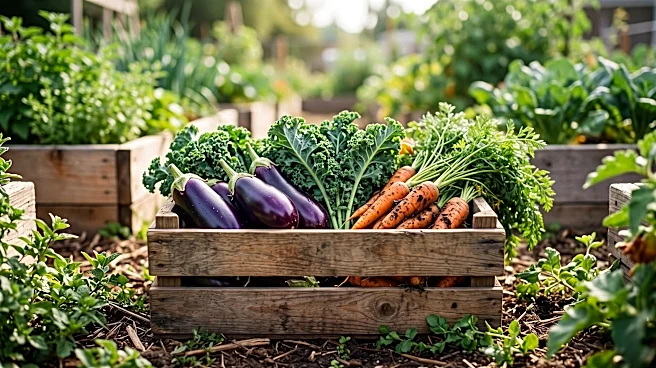
22% of households reported inadequate or severely inadequate food access, and 14.7% of individuals experienced hunger. This issue stems not from a lack of food availability, but from economic barriers such as unemployment, low household incomes, and rising living costs, which prevent families from affording nutritious meals. To address this, there is a growing emphasis on household farming and the revival of indigenous foods as complementary strategies to commercial agriculture. Initiatives like community gardens in townships across Gauteng and Cape Town demonstrate how available spaces can be utilized for food production, easing pressure on household food budgets and improving access to fresh produce. The approach also includes integrating food production skills into primary school education, building on programs like the Department of Basic Education’s School Food Garden Initiative.
Why It's Important?
The focus on household farming and indigenous foods is crucial for South Africa as it offers a sustainable and community-driven solution to food insecurity. By empowering households to grow their own food, the country can mitigate the impact of economic hardships on food access, thereby improving nutritional outcomes and reducing reliance on commercial food systems. This strategy also promotes the preservation of traditional agricultural knowledge and crops, which are often more resilient and suited to local conditions. The success of such initiatives can lead to stronger, more self-sufficient communities, fostering local economies and reducing the environmental footprint associated with large-scale food distribution. Furthermore, integrating agricultural education into schools can cultivate a new generation aware of food sources and sustainable practices, contributing to long-term food security and community resilience.
What's Next?
To further strengthen food security through household farming, the South African government is expected to enhance existing support mechanisms. This includes improving access to essential resources such as seeds, tools, water, suitable land, and agricultural guidance for households and community gardens. The aim is to make these initiatives more productive and sustainable. There is also an anticipated focus on learning from international models, such as Cuba's urban agriculture programs, to adapt successful strategies for South Africa's unique urban environments. Continued efforts will likely involve collaboration between government, agricultural organizations, schools, and communities to ensure the effective transfer of food production skills across generations and to integrate household farming into a broader national food security strategy.
Beyond the Headlines
The emphasis on household farming in South Africa extends beyond immediate food provision, touching upon deeper societal and cultural implications. It represents a shift towards greater food sovereignty, allowing communities to have more control over their food systems and dietary choices. This approach can also foster social cohesion through community gardens, where shared labor and knowledge exchange strengthen neighborhood bonds. Ethically, it addresses the right to food by empowering individuals to secure their own sustenance, reducing dependency and enhancing dignity. Culturally, the revival of indigenous foods reconnects communities with their heritage, promoting biodiversity and traditional ecological knowledge. In the long term, this strategy could lead to a more resilient food system, less vulnerable to global supply chain disruptions and economic fluctuations, while simultaneously promoting healthier eating habits and environmental stewardship.