


What's Happening?
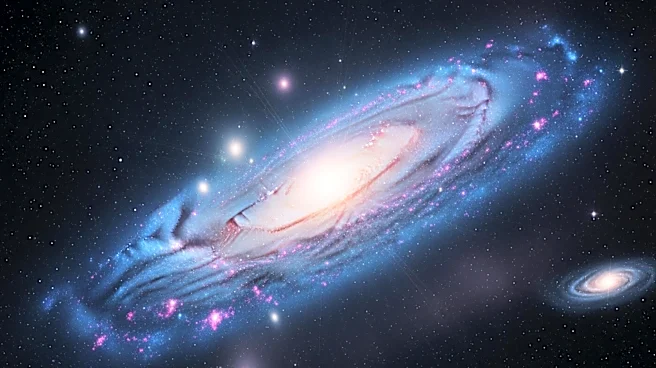
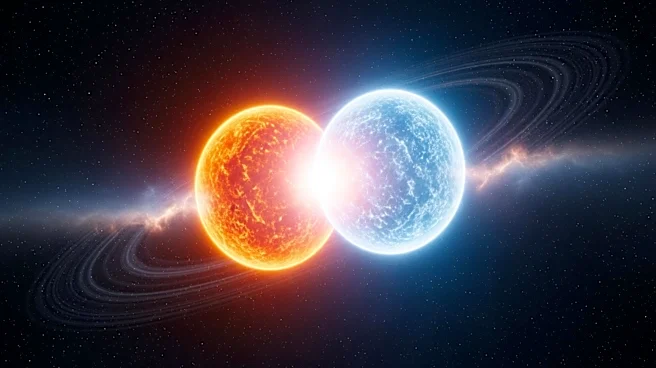
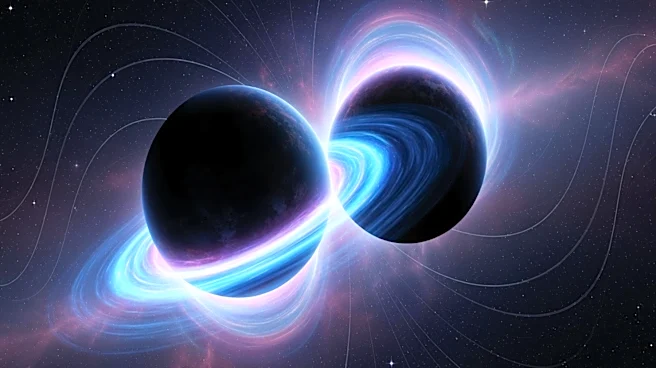
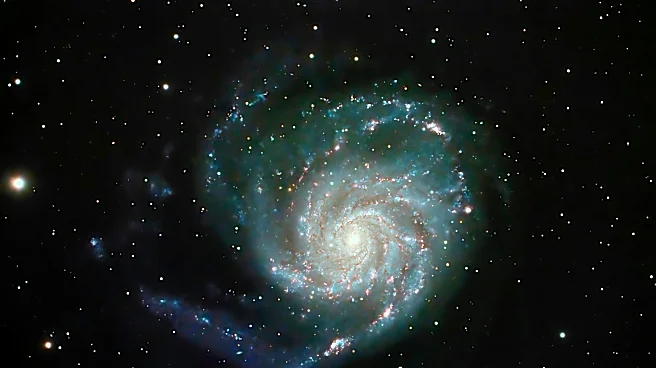
Astronomers have identified two supermassive black holes in the galaxy Markarian 501, located 500 million light-years away, that are on a collision course. Using radio telescope data, researchers discovered that the galaxy's bright core, previously thought
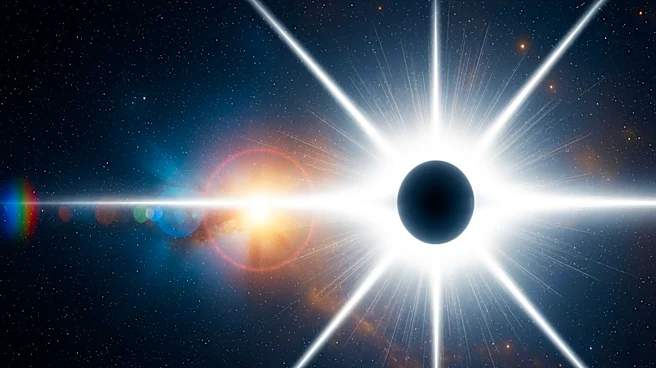
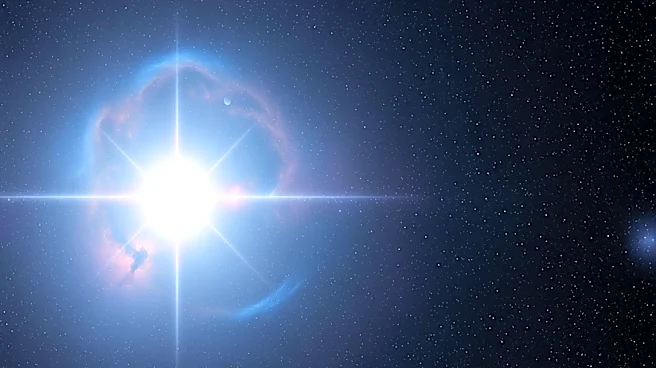
to be a blazar, is actually powered by two black holes. These black holes are expected to merge within the next 100 years, potentially releasing powerful gravitational waves detectable on Earth.
Why It's Important?
The impending collision of these black holes presents a rare opportunity to study gravitational waves, which are ripples in space-time caused by massive cosmic events. Detecting these waves could provide valuable insights into the properties of black holes and the dynamics of galaxy formation. This event could significantly advance our understanding of the universe's most extreme phenomena.
What's Next?
As the black holes continue to spiral towards each other, astronomers will monitor their progress using gravitational wave detectors. The collision, when it occurs, will offer a chance to study the effects of such a merger and improve models of black hole behavior and interactions.