
What's Happening?
US Ambassador Mike Huckabee and his family uncovered ancient coins and jar fragments during a tour near Na'ale in the Mateh Binyamin Regional Council, as announced by the Yesha Council. The discovery was
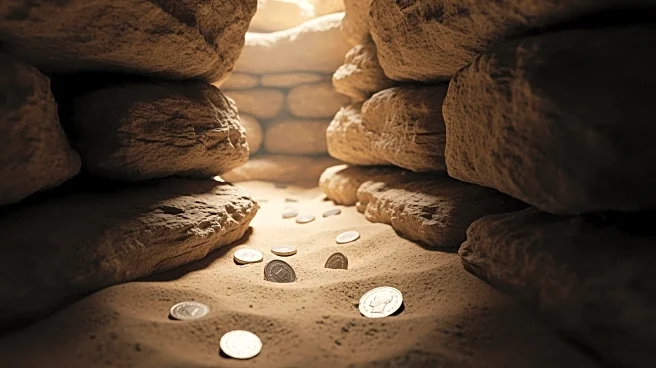
made in two caves, with the first containing jar fragments dating back to the 2nd Century CE, suggesting it was a refuge during the Bar-Kochba Revolt. In a second, previously unknown cave, the family used a metal detector to find five ancient coins potentially from the same era. The discovery was part of a tour organized by Ruthie Lieberman and guided by Dr. Dvir Raviv from Bar-Ilan University, aimed at strengthening connections between Israel's supporters in the US and the region.
Why It's Important?
The discovery by Ambassador Huckabee's family highlights the historical significance of the West Bank region, particularly in relation to the Bar-Kochba Revolt. Such findings can bolster claims of historical ties to the land, which are often central to political and cultural narratives in the region. For the US, this event underscores the ongoing diplomatic and cultural engagement with Israel, potentially influencing public perception and policy decisions. The involvement of a high-profile US figure like Huckabee may also draw increased attention to archaeological efforts and the historical narratives they support.
What's Next?
The discovery may lead to further archaeological exploration in the area, potentially uncovering more artifacts that could provide additional insights into the historical use of the region during the Bar-Kochba Revolt. The findings could also influence political discourse regarding territorial claims and historical rights in the region. Additionally, the event may encourage more US-Israel cultural and historical exchanges, fostering deeper bilateral ties.
Beyond the Headlines
The discovery raises questions about the role of archaeology in political narratives, particularly in contested regions like the West Bank. It highlights how historical findings can be used to support contemporary claims and influence public opinion. The involvement of US figures in such discoveries may also reflect broader geopolitical strategies and cultural diplomacy efforts.