



What's Happening?
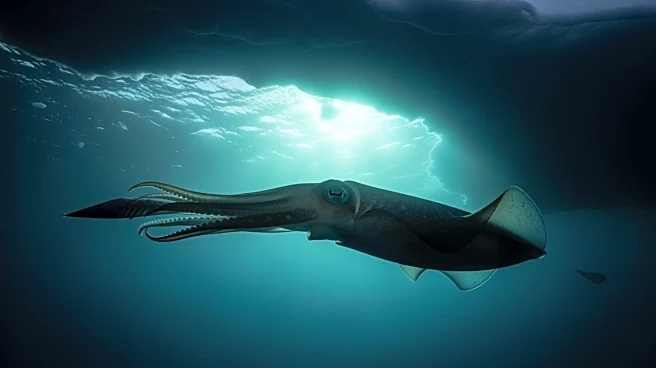
Dr. Michelle Taylor and her team from the Ocean Census have made a groundbreaking discovery during their deep-sea expedition near the South Sandwich Islands in the south Atlantic Ocean. The team captured the first-ever video footage of a colossal squid,
a creature so rare that it has not been seen for 100 years. The juvenile squid, measuring 30cm in length, was spotted at a depth of 600 meters. This discovery was made possible through the use of a remotely operated vessel equipped with cameras, livestreaming the expedition's findings. The footage, initially mistaken for a more common glass squid, was identified by enthusiasts watching the livestream. The expedition, which lasted 35 days, also uncovered other significant marine life, including zombie worms and a carnivorous sponge. Dr. Taylor's team collected nearly 2,000 specimens and thousands of high-definition images, contributing to the understanding of relatively untouched ecosystems.
Why It's Important?
The discovery of the colossal squid is significant as it highlights the potential for new scientific insights into deep-sea ecosystems, which remain largely unexplored. This finding underscores the importance of technological advancements in marine research, allowing scientists to document and study rare species in their natural habitats. The expedition's success in capturing live footage of such a rare creature could inspire further exploration and conservation efforts in remote oceanic regions. Additionally, the discovery provides hope that there are still relatively unimpacted ecosystems, which are crucial for understanding the effects of climate change on marine life. The data collected during this expedition could inform future policies and strategies aimed at preserving these delicate environments.
What's Next?
Following this discovery, the Ocean Census team is likely to continue analyzing the collected specimens and footage to gain deeper insights into the biology and behavior of the colossal squid and other species found during the expedition. The findings may lead to further expeditions to explore other remote and uncharted areas of the ocean. The scientific community and environmental organizations may use this data to advocate for increased protection of these ecosystems. Additionally, the public interest generated by the livestreamed footage could lead to greater awareness and support for ocean conservation initiatives.
Beyond the Headlines
The expedition's success in capturing rare marine life on camera highlights the ethical considerations of deep-sea exploration. While the discovery of new species is exciting, it raises questions about the impact of human activity on these fragile ecosystems. The expedition's findings could prompt discussions on the balance between scientific exploration and the preservation of untouched natural environments. Furthermore, the use of livestreaming technology in scientific research may set a precedent for increased transparency and public engagement in future expeditions, potentially influencing how scientific discoveries are shared with the world.