





What's Happening?
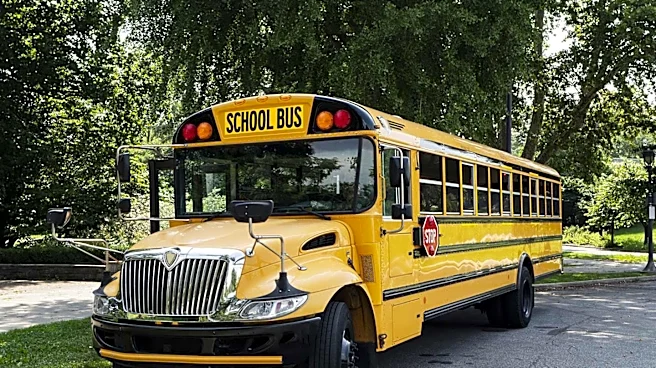
Several towns across Connecticut, including Vernon, Bridgeport, Danbury, Shelton, Stratford, North Haven, and New Haven, are installing AI-powered license plate readers on school buses through contracts with the company BusPatrol. These cameras are designed
to activate only when a school bus is stopped with its warning lights and stop arm engaged, capturing footage of motorists illegally passing the bus. The recordings are then provided to local law enforcement for enforcement. This initiative follows a 2024 law change that granted municipalities more authority to establish video monitoring systems and issue fines for such violations. New Haven, which implemented the technology earlier this year on over 300 buses, has already recorded 12,000 incidents. Vernon's police chief, Marc Petruzzi, stated the cameras aim to prevent tragedies, noting nearly 100 incidents were caught in the first three days of their program.
Why It's Important?
The deployment of these license plate readers on school buses is a significant development in road safety and law enforcement technology in Connecticut. It aims to address the long-standing issue of drivers illegally passing stopped school buses, a dangerous practice that has resulted in fatalities and serious injuries. The technology provides a new tool for enforcement, potentially increasing accountability and deterring dangerous driving behavior around school zones. However, it also raises substantial privacy concerns among residents and civil liberties advocates. Connecticut has become the state with the most automated license plate reader cameras per capita in New England, leading to worries about data storage, sharing with federal agencies, and potential for broader surveillance. The balance between public safety and individual privacy is a critical aspect of this technological adoption.
What's Next?
The implementation of these school bus cameras is expected to continue, with more towns potentially adopting the technology. However, the ongoing debate surrounding privacy and surveillance is likely to intensify. Governor Lamont has called for a 30-day pause on new automated license plate reader installations while the Connecticut Police Officers Standards and Training Council develops guidance for data retention and sharing. While this pause did not specifically target school bus-mounted cameras, it indicates a broader effort to evaluate the legal and ethical implications of such technologies. Stakeholders, including civil liberties groups, will likely continue to advocate for stricter regulations on data usage and sharing to prevent potential misuse, particularly concerning federal immigration enforcement or other states' laws.
Beyond the Headlines
The widespread adoption of AI-powered surveillance technologies, even for seemingly benign purposes like school bus safety, highlights a growing tension between technological advancement and civil liberties. The concerns extend beyond immediate enforcement to the potential for data aggregation and its use in unforeseen contexts, such as linking to other databases for broader surveillance. The debate in Connecticut reflects a national conversation about the appropriate limits of government and corporate access to personal data in an increasingly connected world. The effectiveness of these cameras in significantly reducing accidents versus their impact on privacy rights will be a key ethical and societal consideration moving forward, potentially influencing future legislation and public policy regarding surveillance technologies.