






What's Happening?
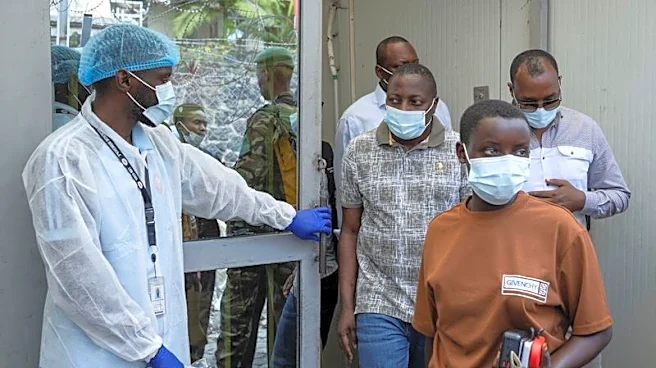
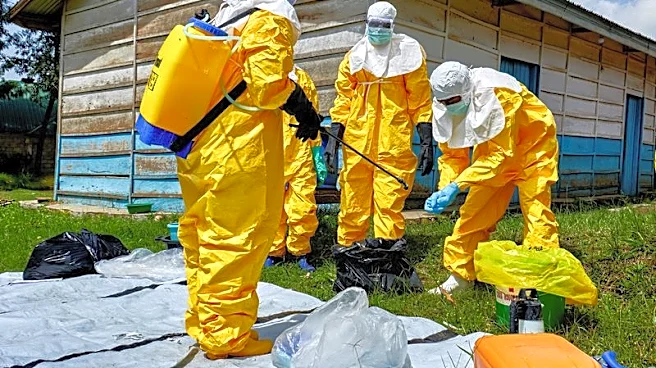
Former Centers for Disease Control and Prevention Director Robert Redfield has expressed concerns that the current Ebola outbreak in the Democratic Republic of Congo and Uganda could escalate into a significant pandemic. The outbreak involves the Bundibugyo
strain, with over 575 suspected cases and 148 deaths reported. Redfield highlighted the rapid spread and late detection of the outbreak, which was not identified until over 100 cases had emerged. The London-based MRC Centre for Global Infectious Disease Analysis estimates the true number of cases could exceed 1,000. The World Health Organization has indicated that a vaccine for the Bundibugyo strain may take six to nine months to develop.
Why It's Important?
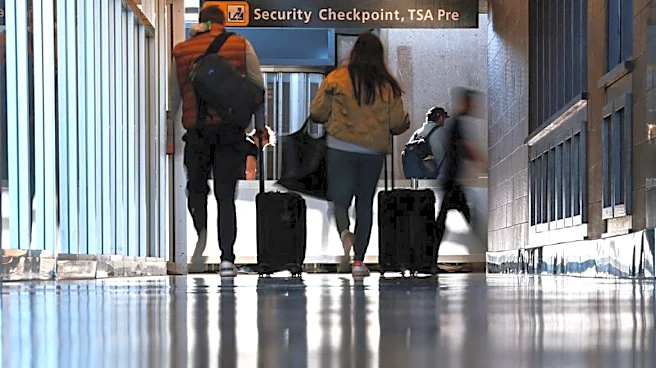
The potential for the Ebola outbreak to become a pandemic poses significant public health challenges. The rapid spread and high mortality rate of the virus could strain healthcare systems, particularly in affected regions. The outbreak's progression could impact international travel and trade, as seen with the diversion of an Air France flight to Canada due to Ebola exposure concerns. The U.S. has implemented travel restrictions and enhanced screening measures to prevent the virus from entering the country. The situation underscores the need for global cooperation in disease surveillance and response to prevent widespread transmission.
What's Next?
Efforts to contain the outbreak will likely involve increased international support and resources to affected regions. The development and distribution of a vaccine will be critical in controlling the spread. Public health agencies may enhance monitoring and preparedness measures to mitigate the risk of the virus spreading to other countries. The situation may prompt discussions on improving global health infrastructure and response capabilities to address future outbreaks effectively.