







What's Happening?
Artificial intelligence (AI) is redefining the concept of food security by enhancing the availability, accessibility, utilization, and stability of food systems. Traditionally, food security focused on ensuring physical, social, and economic access to
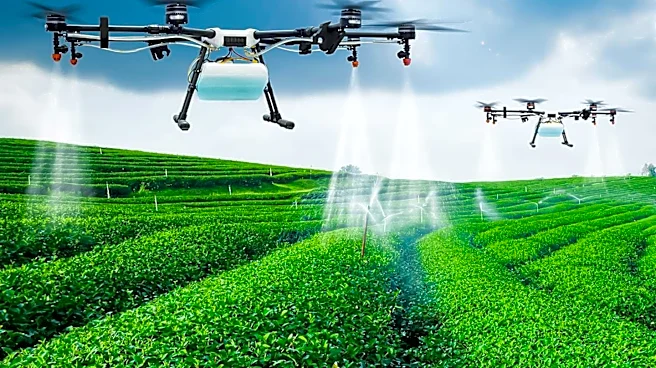
sufficient, safe, and nutritious food. However, with AI, this definition expands to include intelligent systems, machines, and networks that learn to predict and optimize agricultural, supply-chain, and consumption processes. AI tools are being deployed for precision agriculture, crop disease detection, yield prediction, and climate modeling to boost food production. Furthermore, AI optimizes food distribution networks, reduces post-harvest losses, and accurately predicts demand-supply gaps, making food more equitably available. For utilization, AI provides nutrition monitoring, personalized diet planning, and quality control. In terms of stability, AI's predictive analytics and early warning systems for factors like droughts, floods, or market shocks enhance resilience and long-term food system stability. This integration of AI aims to sustain these four pillars without undermining environmental, economic, or social systems for future generations.
Why It's Important?
The integration of AI into food security systems holds significant importance for global stability and economic well-being. By leveraging AI for predictive analytics and optimization, countries can proactively address potential food shortages and price volatility, which often lead to social unrest and economic instability. Enhanced precision agriculture, driven by AI, can lead to more efficient resource use, reducing waste and increasing yields, thereby boosting agricultural sector profitability and sustainability. This is crucial for economies heavily reliant on agriculture. Moreover, improved food distribution and reduced post-harvest losses can stabilize food prices, benefiting consumers and mitigating inflationary pressures. The ability of AI to provide early warnings for climate shocks and market fluctuations allows for timely interventions, protecting vulnerable populations and preventing humanitarian crises. This technological shift can also foster innovation in the agricultural sector, creating new business opportunities and skilled jobs in data science and AI development.
What's Next?
The future trajectory of AI in food security involves continuous development and deployment of more sophisticated intelligent systems. There will likely be increased investment in digital infrastructure, particularly in rural areas, to support AI-driven agricultural technologies. Policy frameworks will need to evolve to address ethical standards, data governance, and institutional responsibilities related to AI in agriculture, ensuring that technological advancements align with food security objectives and do not solely serve commercial interests. The development of integrated agricultural data platforms will be crucial for improving the accuracy of AI-powered forecasting and decision-support systems. Efforts will also focus on making AI interventions accessible and affordable for smallholder farmers through farmer-oriented platforms, digital extension services, and subsidized access to technologies like satellite monitoring and smart sensors. The goal is to ensure AI complements agroecological principles, promoting sustainable practices and improving environmental outcomes rather than encouraging environmentally damaging intensification.
Beyond the Headlines
Beyond the immediate benefits, the widespread adoption of AI in food security raises deeper implications concerning data ownership, digital divides, and the potential for technological colonialism. As AI systems become central to agricultural decision-making, questions about who owns and controls the vast amounts of data generated will become paramount. There's a risk that large corporations or technologically advanced nations could dominate this space, potentially marginalizing smaller farmers or less developed regions. Bridging the digital literacy gap and ensuring equitable access to AI technologies will be critical to prevent exacerbating existing inequalities. Furthermore, the ethical considerations of AI, such as algorithmic bias in resource allocation or market predictions, need careful attention. The long-term shift could see a more resilient and efficient global food system, but only if governance frameworks are established to ensure inclusivity, protect ecological integrity, and support local agricultural contexts, preventing a scenario where external corporate interests override local needs and priorities.