

What's Happening?
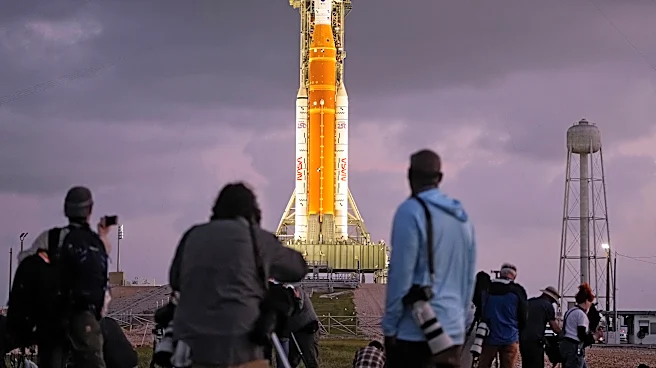
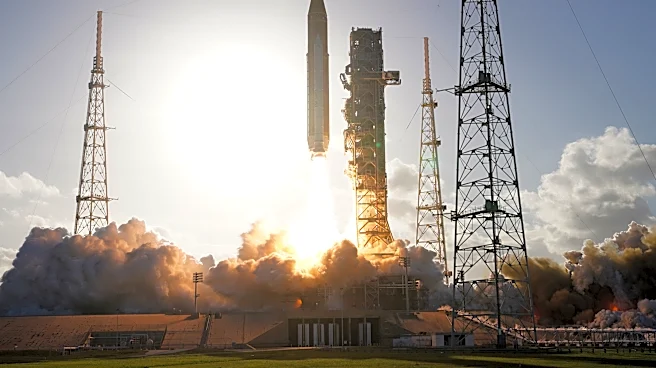
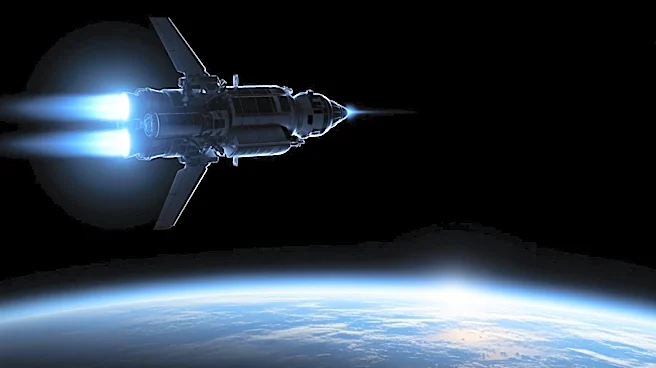
NASA's Artemis II mission continues as the Orion spacecraft, carrying a crew of four astronauts, is on a precise trajectory to fly by the moon. Flight controllers at NASA's Johnson Space Center in Houston decided to cancel the first planned outbound trajectory correction
burn, as the spacecraft is already on the correct flight path. This burn was one of three planned adjustments to fine-tune the spacecraft's velocity and trajectory. The mission is part of NASA's Artemis program, which aims to return humans to the moon and establish a sustainable presence there.
Why It's Important?
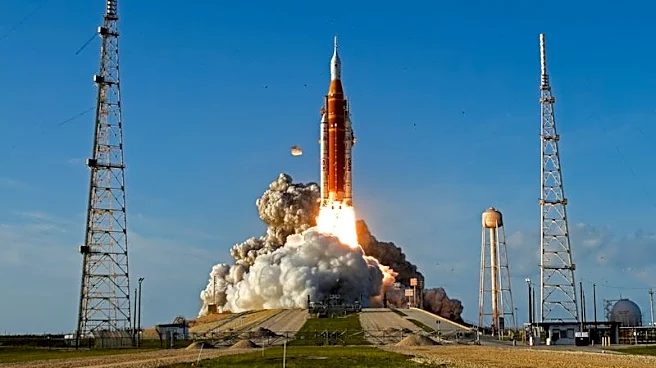
The decision to cancel the trajectory correction burn indicates that the mission is proceeding smoothly and the spacecraft is performing as expected. This is crucial for the success of the Artemis II mission, which serves as a precursor to future lunar exploration missions. The mission's success will validate the capabilities of the Space Launch System and Orion spacecraft, paving the way for more ambitious missions, including potential human landings on the moon and Mars. The mission also demonstrates NASA's ability to conduct complex space operations and manage risks associated with deep-space travel.
What's Next?
As the Artemis II mission progresses, the crew will continue to monitor the spacecraft's trajectory and make any necessary adjustments. The mission will include a lunar flyby, providing valuable data and insights for future missions. The crew will also conduct scientific experiments and tests, including a communications test with the Deep Space Network. The mission is expected to conclude with a reentry into Earth's atmosphere, a critical phase that will test the spacecraft's heat shield and reentry capabilities.