



What's Happening?
Salt Lake City is preparing for its annual winter inversion season, a period when cold air becomes trapped under warmer air, leading to a buildup of pollutants. Dr. Cheryl Pirozzi, a pulmonary medicine specialist at the University of Utah, emphasizes
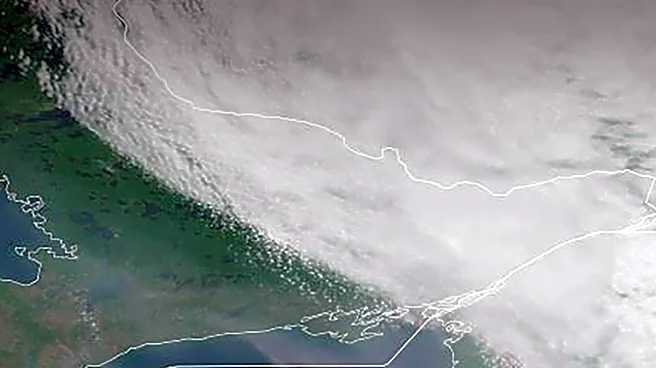
that there is no safe level of air pollution and it affects everyone. The Salt Lake Valley's mountainous terrain contributes to this phenomenon by trapping heat and preventing air circulation. Rising temperatures due to climate change are exacerbating the issue, impacting the formation of ground-level ozone, a harmful pollutant. Air pollution exposure is linked to the development and worsening of lung diseases like COPD and asthma, increased severity of respiratory infections, and higher risks for pneumonia, COVID-19, and tuberculosis. Salt Lake City recorded an Air Quality Index (AQI) of 123 on January 13, 2026, making it the worst in the U.S. at that time. Experts advise residents to monitor air quality daily, use public transportation, stay indoors during poor air quality days, and wear N95 masks outdoors.
Why It's Important?
Salt Lake City's persistent air quality issues pose a significant public health crisis for its residents. The direct link between air pollution and severe respiratory illnesses places a substantial burden on the healthcare system and diminishes the quality of life for many. The economic impact can also be considerable, affecting productivity due to illness and potentially deterring tourism or new residents. The problem is compounded by climate change, indicating a need for long-term, systemic solutions beyond immediate mitigation strategies. The ongoing challenge highlights the complex interplay between geography, climate, and human activity, underscoring the urgency for effective environmental policies and public awareness campaigns. The situation in Salt Lake City serves as a critical case study for other urban areas facing similar environmental challenges.
What's Next?
As winter approaches, Salt Lake City residents can expect continued advisories regarding air quality. Public health officials and environmental agencies will likely intensify efforts to inform the public about protective measures, such as checking daily air quality reports, limiting outdoor activities, and utilizing public transportation. Research initiatives, like the 2026 Salt Lake City Summer Ozone study, will continue to analyze data to better understand pollution sources and inform mitigation strategies. Local organizations, including the Utah Division of Air Quality, will work with researchers to translate findings into actionable policies. There may be increased calls for legislative action to address emissions from various sources, including industrial, vehicular, and residential. The ongoing health impacts will likely keep air quality a prominent topic in local political discourse and public health campaigns.
Beyond the Headlines
The recurring air quality crisis in Salt Lake City points to deeper societal and environmental challenges. It highlights the tension between urban development, industrial activity, and public health, forcing a reevaluation of sustainable growth models. The issue also brings to the forefront environmental justice concerns, as vulnerable populations often bear a disproportionate burden of pollution-related health problems. Long-term, the situation could drive innovation in green technologies and urban planning aimed at reducing emissions and improving air circulation. It also underscores the critical role of scientific research in informing public policy and the need for greater collaboration between academic institutions, government agencies, and local communities to address complex environmental problems. The ongoing struggle for clean air in Salt Lake City reflects a broader national and global challenge in balancing economic progress with environmental stewardship and public well-being.