









What's Happening?
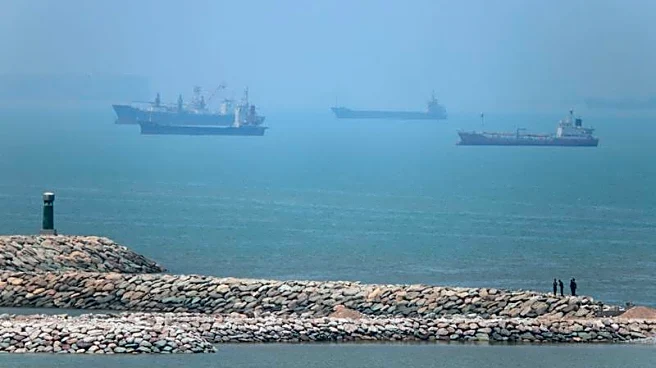
The Strait of Hormuz, a crucial maritime passage, remains closed due to the presence of 80 mines, according to Intertanko, an independent tanker owner body. The closure, part of the ongoing 2026 Strait of Hormuz crisis, has resulted from tensions involving
Iran, the United States, and Israel. The main route through the strait is currently closed and considered dangerous, likened to a highway with a blocked central lane. This situation presents significant challenges for global shipping and oil markets, with the potential for the closure to extend until the end of the year.
Why It's Important?
The Strait of Hormuz is a strategic chokepoint for global oil and gas shipments, and its closure has significant implications for global energy markets. The presence of mines and the ongoing geopolitical tensions could lead to prolonged disruptions in shipping, affecting oil supply and prices worldwide. The situation highlights the vulnerability of global trade routes to geopolitical conflicts and the potential for significant economic impacts if the strait remains closed for an extended period.
What's Next?
Observers will be monitoring the progress of mine clearance operations and diplomatic efforts involving the United States, Iran, and other stakeholders. Successful mine-clearing operations and agreements to reopen the strait would be critical for resuming normal shipping activities. However, continued military tensions or additional maritime threats could further delay the resumption of normal operations. The situation remains fluid, with potential for further disruptions as negotiations proceed.