






What's Happening?
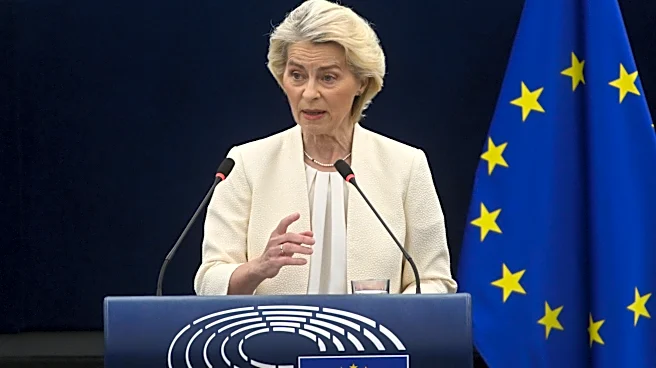
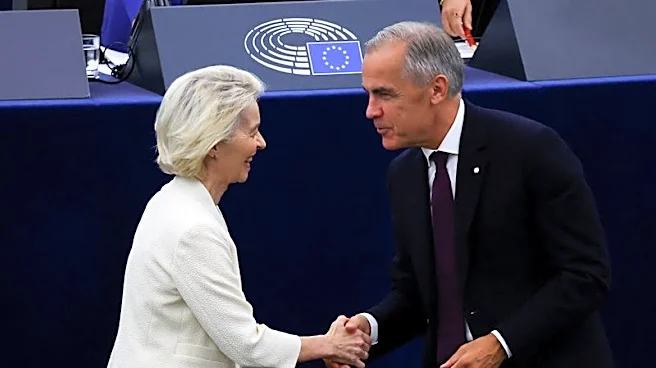
The European Union is advancing a plan to prohibit social media access for children under 13 across its member states and implement restrictions for teenagers. European Commission President Ursula von der Leyen announced this initiative, stating that
individuals under 13 would be barred from social media, and those aged 13 to 15 would not be permitted to have personal accounts. Instead, 13- and 14-year-olds would be allowed 'mini accounts' with parental supervision and limited features, capped at one hour of use per day. This move follows similar actions by individual EU countries and a broader global push to regulate children's social media use, with Australia having already banned social media for under 16s in December 2025. The European Commission is expected to propose a new Kids Act, which would shift the burden of proof to social media platforms, requiring them to demonstrate the safety of their services for minors. Von der Leyen emphasized the EU's power to set rules for technology, asserting that 'Europe has the power to act. It is us who decide the rules, not Big Tech.'
Why It's Important?
This proposed EU legislation carries significant implications for the global technology industry, particularly social media companies, many of which are U.S.-based. If enacted, the Kids Act would establish a precedent for stringent age verification and content moderation requirements, potentially forcing platforms to overhaul their operational models and privacy safeguards for younger users. The reversal of the burden of proof, compelling companies to prove their services are safe for minors, represents a substantial regulatory shift. This could lead to increased compliance costs, development of new age-gating technologies, and potentially reduced engagement from younger demographics, impacting revenue streams. For U.S. policymakers and advocacy groups, the EU's proactive stance could serve as a model or catalyst for similar regulations, especially given growing concerns about the mental health and online safety of children. The legislation highlights a broader international trend towards greater governmental oversight of digital platforms, challenging the traditional self-regulatory approach often favored by tech companies.
What's Next?
The proposed Kids Act will undergo a lengthy approval process, requiring endorsement from individual EU member states, which could take several years. Despite the potential for a prolonged legislative journey, the announcement signals a clear direction for future digital regulation within the EU. Social media companies are likely to engage in lobbying efforts and begin assessing the technical and financial implications of such a ban. They may also start developing new features or modifying existing ones to comply with potential age restrictions and parental supervision requirements. Legal challenges are also possible, as platforms may contest the feasibility or scope of the proposed regulations. Furthermore, the EU's actions could inspire other nations, including the U.S., to consider similar legislative measures, potentially leading to a fragmented global regulatory landscape for social media and online safety. The ongoing discussions around AI regulation, also mentioned by Von der Leyen, suggest a broader regulatory push across various technological domains.
Beyond the Headlines
The EU's initiative delves into the ethical and societal dimensions of digital technology's impact on youth. Beyond the immediate regulatory and economic consequences, this move reflects a growing global concern about the developmental effects of early social media exposure, including issues like mental health, privacy, and online exploitation. The concept of 'mini accounts' with parental supervision highlights a nuanced approach, attempting to balance children's digital literacy with protective measures. This legislation could foster innovation in child-safe digital environments and parental control technologies. It also underscores a philosophical debate about who holds ultimate responsibility for children's online well-being: parents, tech companies, or governments. The EU's assertion of its power to regulate 'Big Tech' signals a broader shift in global governance, where regional blocs are increasingly asserting their sovereignty over digital spaces, potentially leading to a more regulated and less uniform internet experience worldwide.