
What's Happening?
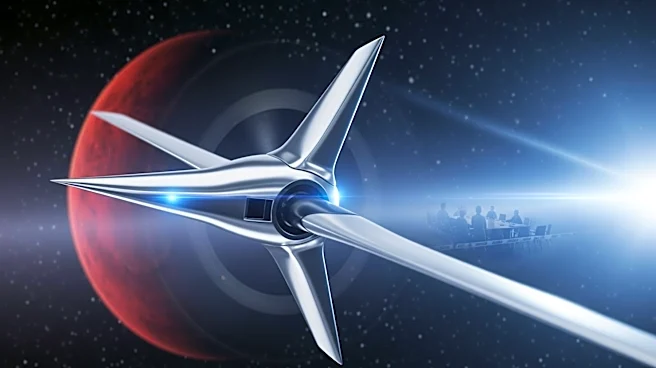
NASA's Jet Propulsion Laboratory (JPL) has successfully tested rotor blades for next-generation Mars helicopters, achieving speeds beyond Mach 1. These tests, conducted in a chamber simulating Martian
conditions, demonstrated that the rotor tips can withstand supersonic speeds without damage. The data from 137 test runs will inform the design of future aircraft capable of carrying heavier scientific payloads. This advancement is part of NASA's Mars Exploration Program, which aims to enhance the capabilities of aerial vehicles on Mars. The new rotor technology will support missions like the SkyFall project, which plans to deploy three advanced helicopters to Mars in 2028.
Why It's Important?
This breakthrough in rotor technology is crucial for expanding the scope of Mars exploration. By enabling helicopters to carry heavier payloads, NASA can equip future missions with more sophisticated scientific instruments, enhancing data collection and analysis. This capability is vital for both robotic and potential human missions, as it allows for more comprehensive exploration of the Martian surface. The success of these tests underscores NASA's commitment to overcoming the challenges of operating in Mars' thin atmosphere, paving the way for more ambitious exploration goals.
What's Next?
NASA will continue to refine the design and capabilities of these next-generation helicopters, incorporating the test data into future mission planning. The SkyFall project is scheduled to launch in December 2028, marking a significant milestone in Mars exploration. As NASA prepares for these missions, collaboration with international partners and the scientific community will be essential to maximize the potential of these advanced aerial vehicles.