
What's Happening?
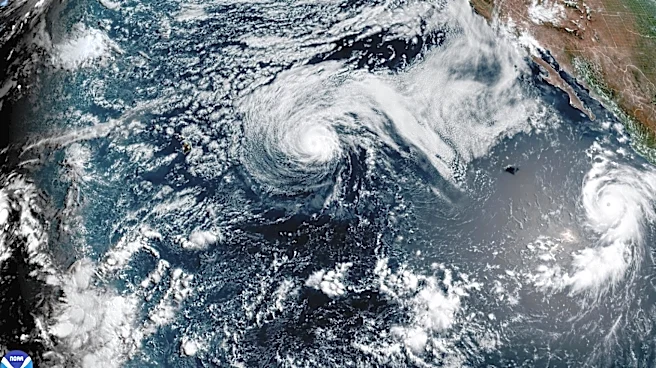
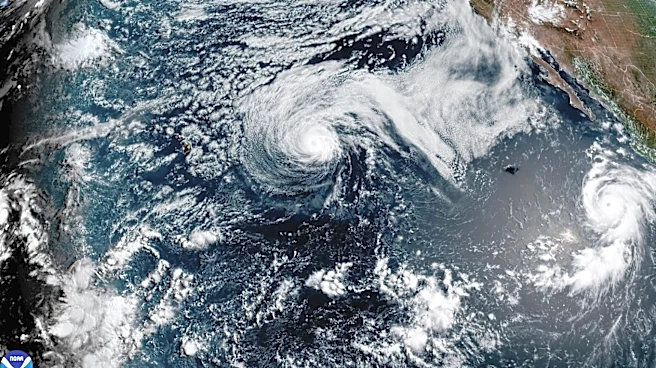
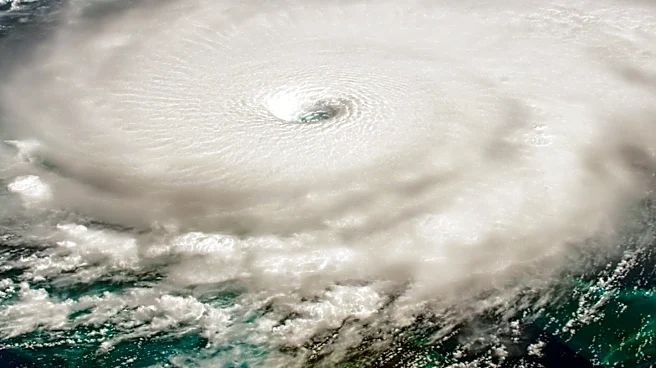
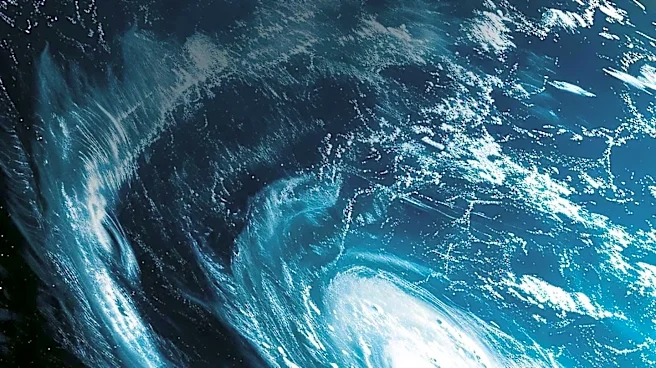
Hurricane Genevieve, currently located in the Pacific Ocean, is experiencing a decrease in intensity as it moves west-northwestward. The National Hurricane Center (NHC) has reported that the hurricane's eye is no longer visible in satellite imagery, indicating
a weakening system. The hurricane is currently under the influence of northwesterly shear, which is affecting its upper-level outflow. As a result, the initial intensity has been lowered to 105 knots. Genevieve is moving along the southwestern periphery of a mid-level ridge over the southwestern United States and northern Mexico. This ridge is expected to strengthen, guiding the hurricane on a west-northwestward path with increased speed over the coming days. The NHC forecasts that Genevieve will continue to weaken, potentially falling below hurricane strength by Friday and becoming post-tropical by day four.
Why It's Important?
The weakening of Hurricane Genevieve is significant as it reduces the potential threat to coastal regions in the Pacific. While the hurricane is not expected to make landfall, its path and intensity are closely monitored due to the potential for high surf and dangerous marine conditions. The forecasted weakening is attributed to environmental factors such as cooler sea surface temperatures and persistent shear, which are common challenges for tropical cyclones in this region. The situation underscores the importance of accurate forecasting and monitoring by agencies like the NHC to ensure preparedness and safety for maritime activities and coastal communities.
What's Next?
As Hurricane Genevieve continues its west-northwestward trajectory, it is expected to encounter further environmental challenges that will contribute to its weakening. The NHC predicts that the hurricane will transition to a post-tropical system as it moves into cooler waters and a drier environment. This transition is anticipated to occur by the weekend, with the system losing its organized convection. Stakeholders, including maritime operators and coastal authorities, will continue to monitor the situation to mitigate any potential impacts on shipping routes and coastal activities.