


What's Happening?
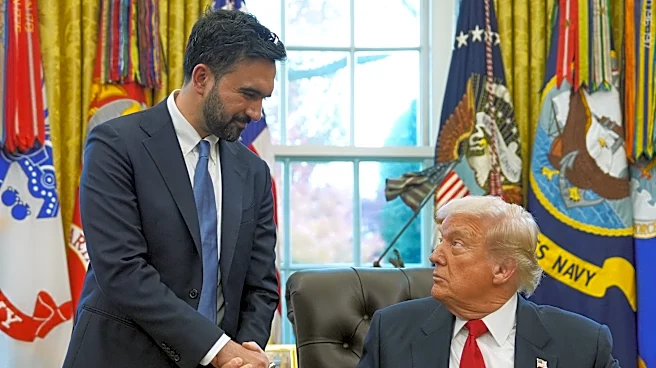
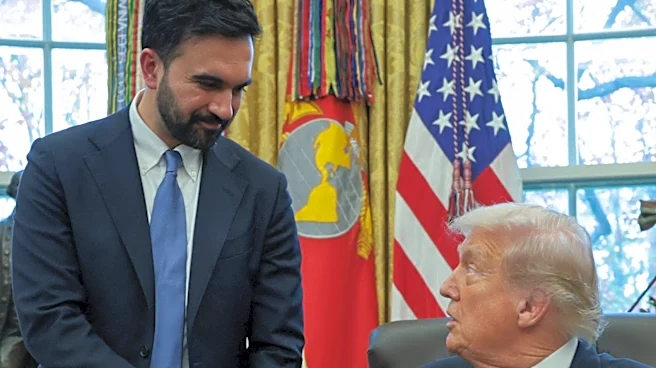
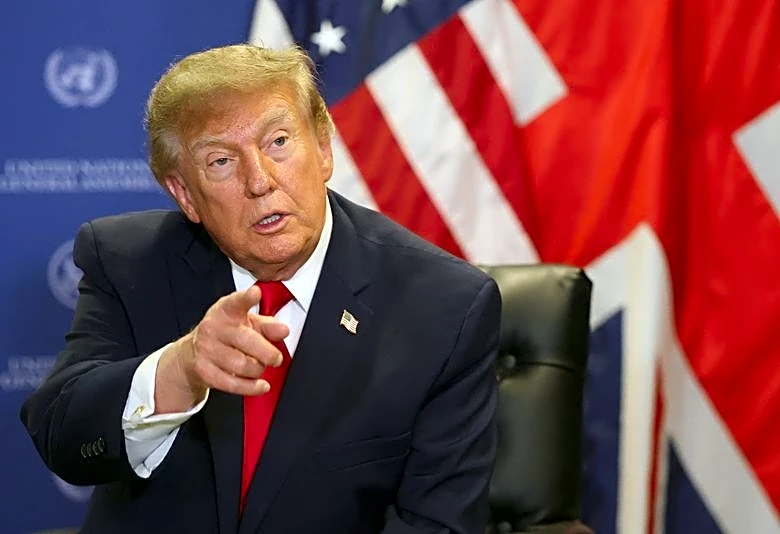
New York City Mayor Zohran Mamdani has stated his readiness to set aside political differences and work with President Trump to address affordability challenges facing New Yorkers. Mamdani, a democratic socialist, emphasized that his priority is to make
life more affordable for residents, even if it means collaborating with individuals from different political parties. He described his conversations with President Trump regarding ways to ease the financial burden on New Yorkers as genuinely appreciated, a notable shift from the combative rhetoric exchanged during Mamdani's mayoral campaign. Housing and affordability have emerged as key areas of common ground between the two leaders, despite their significant disagreements on other policy matters such as immigration enforcement and Mamdani's democratic socialist platform. This commitment to cross-party collaboration on essential city needs was a stance Mamdani adopted even before taking office.
Why It's Important?
This development is significant for New York City residents grappling with high costs of living, as it signals a potential for bipartisan efforts to tackle pressing economic issues. The collaboration between a democratic socialist mayor and President Trump, who represent vastly different political ideologies, could set a precedent for pragmatic governance focused on tangible outcomes for citizens. For New York's economy, any successful initiatives stemming from this collaboration could lead to improved housing accessibility and reduced living expenses, potentially stimulating local commerce and retaining residents who might otherwise leave due to financial strain. This approach could also influence national political discourse, demonstrating that common ground can be found on 'kitchen-table issues' despite broader ideological divides, potentially encouraging similar cross-party cooperation in other cities or at the federal level. The willingness of Mayor Mamdani to engage with President Trump on these issues highlights the severity of the affordability crisis in New York and the need for diverse solutions.
What's Next?
The immediate next steps will likely involve continued discussions and potential policy proposals focusing on housing and affordability in New York City. Both Mayor Mamdani and President Trump may seek to identify specific programs or legislative actions that can be jointly supported to alleviate financial pressures on residents. This collaboration could lead to the introduction of new city-level initiatives or advocacy for federal support tailored to New York's unique economic landscape. Stakeholders, including local businesses, housing advocates, and community organizations, will be closely watching for concrete proposals and their implementation. The success or failure of these joint efforts could influence future political strategies, potentially encouraging more pragmatic alliances on issues of shared concern, or conversely, reinforcing existing political divides if common ground proves too difficult to maintain beyond initial discussions. The focus will be on translating the expressed willingness to cooperate into tangible benefits for New Yorkers.
Beyond the Headlines
This unlikely alliance between Mayor Mamdani and President Trump on affordability issues carries deeper implications beyond immediate policy outcomes. It challenges conventional political narratives, suggesting that the urgency of local economic crises can sometimes transcend partisan loyalties. Ethically, it raises questions about the balance between ideological purity and pragmatic governance, particularly when addressing fundamental needs like housing and cost of living. Culturally, it could reshape public perception of political adversaries, demonstrating that cooperation is possible even between figures who have previously engaged in bitter rhetoric. This development might also signal a long-term shift in political strategy, where local leaders prioritize direct engagement with federal figures, regardless of party affiliation, to secure resources and support for their constituents. The focus on 'kitchen-table issues' could also empower voters to demand more results-oriented governance from their elected officials, potentially leading to a re-evaluation of what constitutes effective political leadership in an increasingly polarized environment.