

What's Happening?
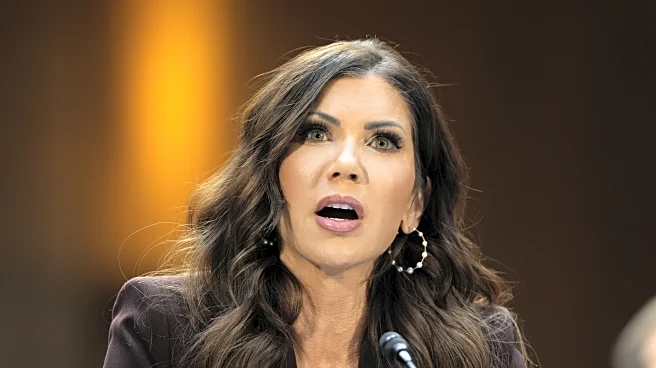
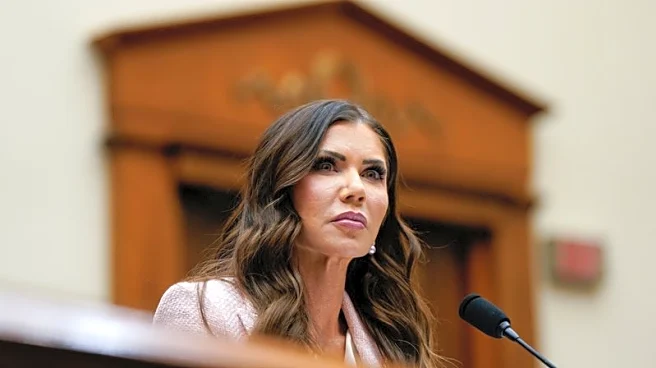
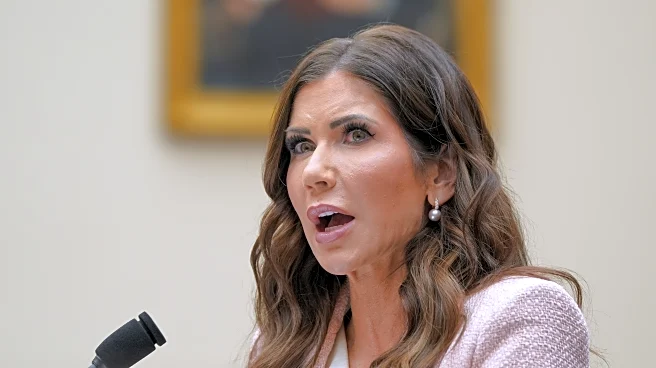
President Donald Trump has announced the dismissal of Homeland Security Secretary Kristi Noem, following a contentious period marked by scrutiny over the department's handling of immigration issues. Noem recently faced the Senate Judiciary Committee,
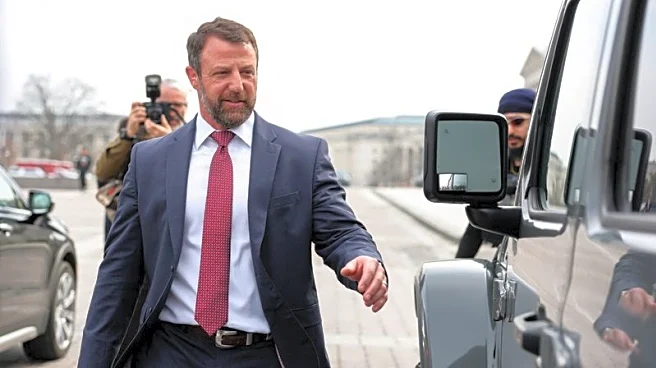
where she was questioned about the use of excessive force by immigration agents and the department's financial management. Her inability to address specific incidents, such as the shooting of Marimar Martinez in Chicago, contributed to mounting criticism. In her place, President Trump has nominated Oklahoma Senator Markwayne Mullin to lead the Department of Homeland Security. This decision has been met with approval from various local activists and public officials in Illinois. The department remains in a state of shutdown due to ongoing legislative gridlock over funding.
Why It's Important?
The firing of Kristi Noem and the nomination of Markwayne Mullin as her successor could significantly impact U.S. immigration policy and the Department of Homeland Security's operations. Noem's tenure was marred by controversies that highlighted systemic issues within the department, particularly concerning immigration enforcement practices. The leadership change comes at a critical time as the department is currently shut down, affecting its ability to function effectively. The decision also reflects President Trump's approach to handling dissent and criticism within his administration, potentially influencing future cabinet dynamics. The nomination of Mullin, a sitting senator, may also shift legislative priorities and impact the balance of power within the Senate.
What's Next?
The nomination of Markwayne Mullin will require Senate confirmation, which could lead to further political debates and scrutiny of his qualifications and policy positions. The ongoing shutdown of the Department of Homeland Security will likely remain a pressing issue, with potential implications for national security and immigration enforcement. Additionally, the broader political landscape may be affected as Congress continues to grapple with funding disputes and the administration's foreign policy decisions, particularly in relation to Iran and Venezuela. Stakeholders, including political leaders and civil society groups, will be closely monitoring these developments.