
What's Happening?
The massive iceberg A23a, which calved from the Filchner Ice Shelf in Antarctica in 1986, is nearing its end as it continues to shrink and break apart in warmer waters. Originally spanning 1,544 square
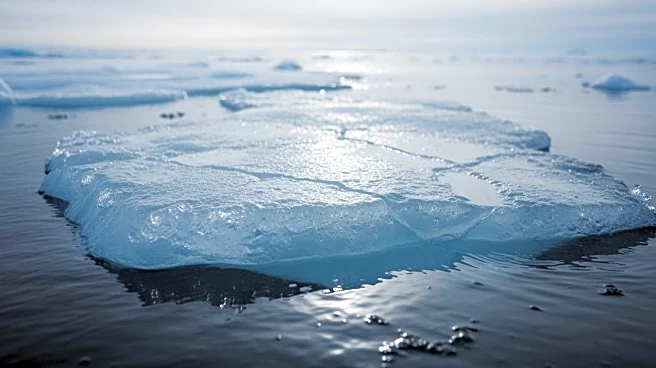
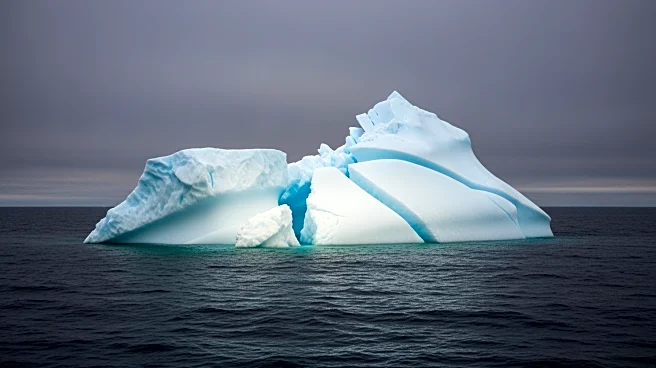
miles, twice the size of Rhode Island, A23a has been tracked by scientists for decades. After being lodged in the Weddell Sea for over 30 years, it began moving north in 2020, driven by ocean currents. As it travels, the iceberg has been breaking into smaller pieces, and by January 2026, it had reduced to 456 square miles, about a third of its original size. The iceberg's surface is now covered in pools of melted ice, turning it a deep blue, a sign of its impending disintegration. Recent satellite images reveal significant cracks and a 'blowout' on its side, allowing more water to enter and smaller ice pieces to break off.
Why It's Important?
The disintegration of iceberg A23a highlights the broader implications of climate change and its impact on polar ice structures. As icebergs like A23a break apart and melt, they contribute to rising sea levels, which can have significant effects on coastal communities and ecosystems. The study of A23a has provided valuable insights into the behavior of large icebergs, informing scientists about the processes and timelines of iceberg deterioration. This knowledge is crucial for predicting future changes in polar regions and understanding the global climate system. The melting of such large ice masses also serves as a stark reminder of the ongoing environmental changes and the need for global efforts to address climate change.
What's Next?
As A23a continues to break apart, scientists expect it to completely disintegrate in the coming days or weeks. The area where A23a is currently located is known as a 'graveyard' for icebergs due to the warmer air and water temperatures that accelerate melting. Researchers will continue to monitor the iceberg's progress and gather data to enhance their understanding of iceberg dynamics. The lessons learned from A23a's journey will be applied to other large icebergs still attached to Antarctica's shores, which are expected to follow similar paths in the future. This ongoing research is vital for improving climate models and preparing for the potential impacts of rising sea levels.