
What's Happening?
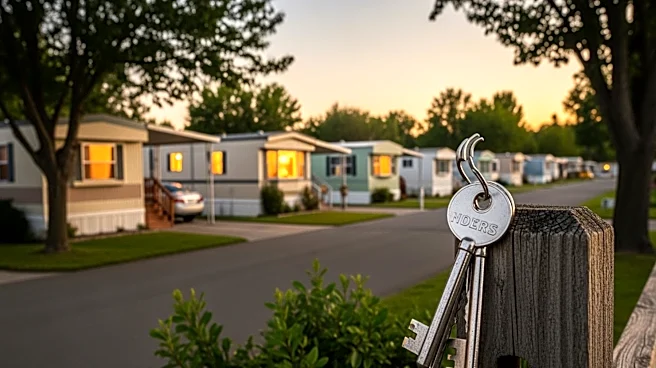
Residents of San Lazaro Mobile Home Park in Boulder County, Colorado, are mobilizing to purchase their community for $42.5 million to avoid potential rent hikes or redevelopment. The park's owner has expressed
willingness to work with residents on this initiative. The residents have until July 18 to secure financing, leveraging a Colorado law that grants them the first right of refusal. This effort is part of a broader trend where resident ownership of mobile home parks is increasing, supported by organizations like Resident Owned Communities USA. The residents are forming a steering committee and seeking support from local government and nonprofit organizations to raise the necessary funds.
Why It's Important?
The potential purchase of San Lazaro Mobile Home Park by its residents highlights a growing movement towards resident ownership of mobile home communities, which can provide stability and prevent abrupt rent increases or redevelopment. This trend is significant as it empowers residents, giving them control over their living conditions and financial future. The initiative also reflects broader legislative efforts across the U.S. to support resident ownership, with similar laws in 22 states. Successful resident ownership can lead to stabilized rents and increased property values, offering a sustainable housing solution for low-income families.
What's Next?
The residents of San Lazaro Mobile Home Park are actively working to secure the necessary financing by the July 18 deadline. They are engaging with local government bodies, nonprofit organizations, and potential investors to gather the required funds. If successful, this purchase could serve as a model for other mobile home communities facing similar challenges. The outcome of this effort will likely influence future legislative and community initiatives aimed at promoting resident ownership of mobile home parks.
Beyond the Headlines
The push for resident ownership of mobile home parks raises important questions about housing affordability and community empowerment. While resident ownership can provide stability, it also transfers the financial responsibilities of park management to the residents, who must navigate challenges such as deferred maintenance and rising operational costs. The success of such initiatives depends on effective management and access to capital, highlighting the need for continued support from government and nonprofit sectors.