




What's Happening?
New research published in 'Plants, People, Planet' demonstrates that precision agriculture techniques can significantly reduce water consumption and improve crop quality in tomato and table grape farming. The study compared traditional farming methods
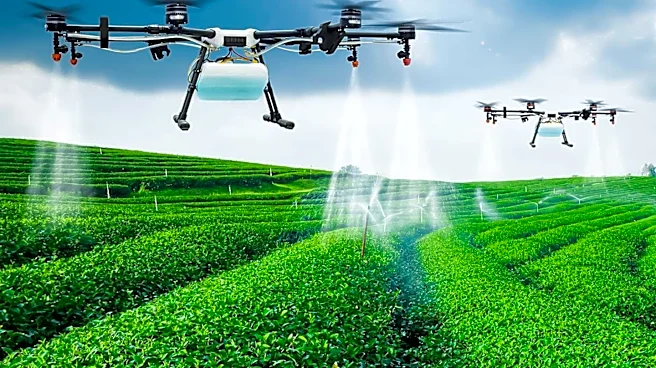
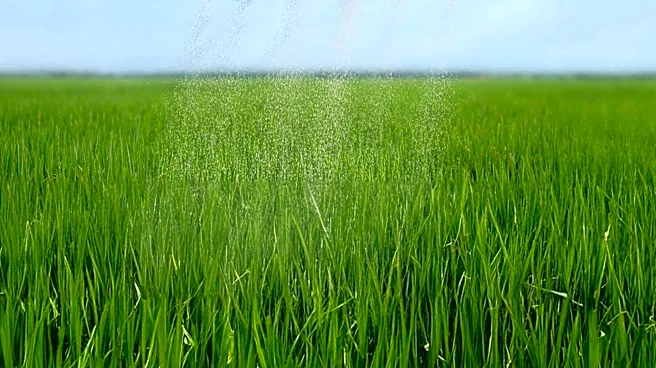
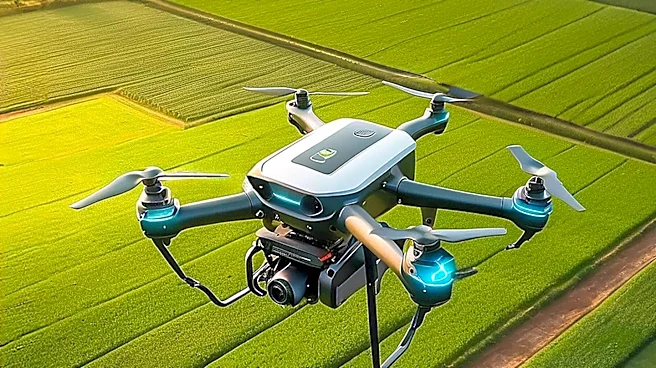
with sensor-based irrigation systems designed to monitor crop needs more accurately. Results indicated that precision agriculture reduced water use by up to 15% without compromising productivity. In fact, the technology led to improvements in both crop yields and overall fruit quality. The smart irrigation systems utilized sensors to measure field conditions, allowing for precise water delivery and preventing overwatering. Additionally, researchers employed modern monitoring tools, including drone-supported technologies and non-destructive methods, to evaluate fruit quality in the field, enabling faster decision-making for farmers. Dr. Giuseppe Ferrara, a professor at the University of Bari Aldo Moro and corresponding author, highlighted that these technologies help shield plants from weather stress, leading to more stable growth and allowing for in-field quality testing.
Why It's Important?
This development is crucial for the U.S. agricultural sector, particularly in regions facing increasing challenges from drought, extreme heat, and water shortages. The adoption of precision agriculture offers a viable solution for farmers to adapt to climate change impacts, ensuring food security and sustainable resource management. By conserving up to 15% of water while enhancing crop quality, these technologies can lead to significant cost savings for farmers and reduce pressure on limited water supplies. Improved crop yields and fruit quality also benefit consumers by providing higher-standard produce. The ability to collect real-time data and make automated decisions empowers farmers to manage their operations more efficiently, mitigating risks associated with unpredictable weather patterns. This shift towards technology-driven farming practices is essential for maintaining the competitiveness and resilience of U.S. agriculture in a changing global climate.
What's Next?
The findings suggest a continued and expanded integration of precision farming technologies into mainstream agricultural practices. Farmers are likely to increasingly invest in smart irrigation and monitoring systems to enhance efficiency and sustainability. The research indicates that these technologies will play an even more critical role in global food production as climate challenges persist. Future developments may include further advancements in sensor technology, AI-driven analytics for predictive farming, and more accessible and affordable precision agriculture tools for a wider range of crops. Policymakers and agricultural organizations may also explore incentives and support programs to encourage the adoption of these water-saving and yield-boosting technologies across the U.S. The focus will remain on developing innovations that help farmers meet environmental challenges while delivering high-quality food to consumers.
Beyond the Headlines
The broader implications of precision agriculture extend beyond immediate water savings and crop improvements. This technological shift represents a fundamental change in how food is produced, moving towards a more data-driven and environmentally conscious approach. Ethically, it raises questions about equitable access to these advanced technologies, ensuring that smaller farms can also benefit from these innovations to avoid widening the gap between large-scale and small-scale agricultural operations. Legally, it may necessitate new regulations concerning data privacy and the use of drone technology in agricultural settings. Culturally, it signifies a departure from traditional farming methods, potentially leading to a new generation of tech-savvy farmers. In the long term, widespread adoption of precision agriculture could contribute to a more resilient food system, reduce the environmental footprint of farming, and redefine the relationship between agriculture and technology, fostering a more sustainable future for food production.