
What's Happening?
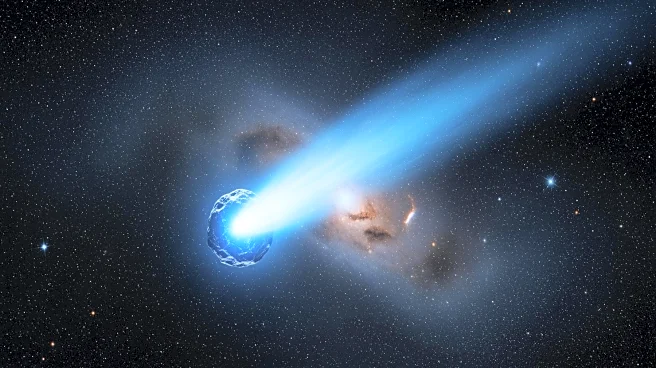
Interstellar comet 3I/ATLAS is nearing its closest approach to Earth, scheduled for December 19, 2025. This comet is only the third confirmed interstellar object to pass through our solar system, following
1I/‘Oumuamua and 2I/Borisov. Despite its proximity, the comet will remain about 170 million miles away, posing no threat to Earth. The event is significant for astronomers, who are eager to study the comet's composition and trajectory. Observers are advised to use telescopes for viewing, as the comet is too faint for the naked eye. The Virtual Telescope Project will provide a live broadcast of the event.
Why It's Important?
The flyby of 3I/ATLAS offers a unique opportunity for scientists to study material from outside our solar system, potentially providing insights into the formation of other planetary systems. The comet's composition and behavior could reveal differences from solar system comets, enhancing our understanding of interstellar objects. This event also highlights the capabilities of modern astronomical technology and international collaboration in tracking and studying such rare phenomena. The data collected could influence future research and exploration strategies.
What's Next?
Following its closest approach, 3I/ATLAS will continue its journey out of the solar system. Observations will continue as long as the comet remains visible, with scientists aiming to gather as much data as possible. The findings from this event may lead to new theories about interstellar travel and the origins of comets. Public interest in astronomy could be boosted by the event, encouraging educational initiatives and increased funding for space research.