








What's Happening?
Norwegian defense firm Kongsberg plans to build a new factory in northern Poland dedicated to producing counter-drone systems. This investment, valued at over 200 million zloty (approximately €46 million or $51 million), is a direct response to increasing
concerns over Russian drone threats and airspace violations. The facility is part of Poland's broader SAN anti-drone program, a joint venture with the Polish state defense group PGZ, which involves a contract worth about 15 billion zloty ($3.8 billion) for 18 anti-drone batteries, 52 firing platoons, 18 command platoons, and 703 vehicles. The project aims to bolster Poland's defense capabilities, particularly along its eastern borders, which have experienced around 20 Russian drone incursions in the past year. Construction is slated to begin this year, with production expected to commence in the first half of 2028, creating over 100 long-term jobs. This initiative also aligns with Poland's 'Eastern Shield' border-security program.
Why It's Important?
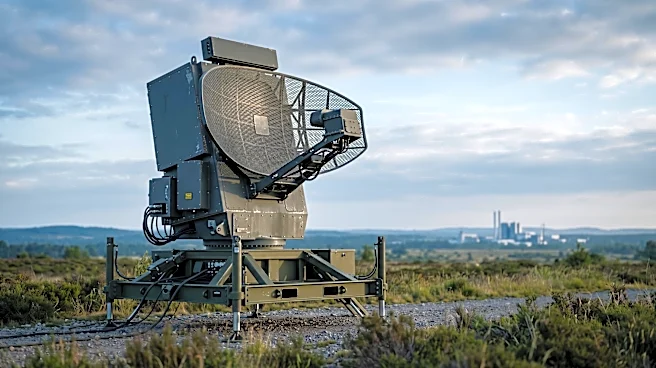
The establishment of this anti-drone factory signifies a critical step in strengthening Poland's national security and its role within NATO's eastern flank. The repeated Russian drone incursions highlight a persistent and evolving threat, necessitating advanced defense mechanisms. This investment not only enhances Poland's ability to detect and neutralize small, low-flying drones but also positions the country as a regional export hub for counter-drone technology. The SAN program's comprehensive architecture, integrating remote weapon stations with radar and electro-optical sensors, aims to protect military sites, critical infrastructure, and population centers. This development reflects a broader trend among NATO members to rapidly expand air-defense capacities and invest in counter-drone technology, especially as Russia continues to employ jet-powered drones in conflicts close to the Polish border, such as in Ukraine. The factory will also foster deeper defense ties between Poland and Norway, contributing to the collective security of the Baltic Sea region.
What's Next?
Construction of the Kongsberg anti-drone facility in northern Poland is scheduled to begin this year, with serial production targeted for the first half of 2028. The SAN program, which includes the deployment of 18 anti-drone batteries, 52 firing platoons, and 18 command platoons, is expected to see full delivery within 24 months of the contract signing. Poland will continue to integrate the command-and-control architecture, with PGZ's subsidiary, Advanced Protection Systems (APS), playing a key role. The Polish government anticipates that approximately 60% of the SAN system's components will be sourced from companies within the PGZ group. This initiative is part of a larger effort to adapt to evolving aerial threats, including the increasing use of networked and jet-powered drones by Russia. The focus will be on ensuring the system's adaptability and open architecture to accommodate future technological advancements and threats.
Beyond the Headlines
This development underscores a significant shift in European defense strategy, moving beyond traditional military hardware to embrace advanced, networked counter-drone technologies. The emphasis on local production and regional export capabilities suggests a long-term vision for defense industrial independence within Europe, particularly among countries bordering Russia. The project also highlights the ethical and strategic challenges posed by drone warfare, where low-cost, mass-produced drones can saturate air defense systems. The integration of various sensors and effectors within the SAN system reflects a multi-layered approach to air defense, acknowledging that no single solution is sufficient against modern aerial threats. Furthermore, the collaboration between Norway and Poland, and the broader strengthening of defense ties among Baltic Sea nations, indicates a concerted effort to build a more resilient and integrated regional security framework in response to geopolitical tensions.