



What's Happening?
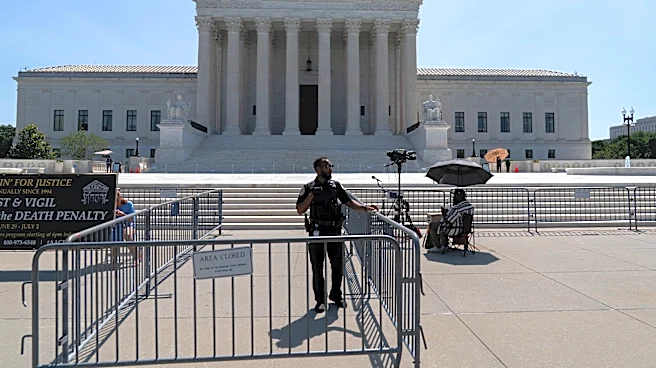
Supreme Court Justice Amy Coney Barrett testified before the House Appropriations Subcommittee on Financial Services and General Government, emphasizing the heightened threat levels against federal judges. Barrett, alongside Justice Elena Kagan, discussed
the Supreme Court's budget request for fiscal year 2027, which seeks $228.4 million, marking a nearly 10% increase from the previous year. This increase is primarily allocated for enhanced security measures. Barrett shared personal experiences of threats, including being provided a bulletproof vest following the leak of a draft opinion that led to the reversal of a 1973 decision on abortion rights. She also recounted a 'swatting' incident at her home, where police responded to a false report of gunshots. Barrett and Kagan are the first justices to testify before Congress since 2019, highlighting the ongoing security concerns faced by members of the judiciary.
Why It's Important?
The testimony underscores the growing security challenges faced by federal judges, reflecting broader societal tensions and the potential risks associated with high-profile judicial decisions. The increased budget request for security measures indicates a recognition of these threats and a commitment to safeguarding the judiciary. This situation highlights the intersection of judicial independence and personal safety, raising questions about the impact of public discourse and media leaks on the security of public officials. The testimony also serves as a reminder of the personal toll such threats can have on judges and their families, potentially affecting their ability to perform their duties without fear of personal harm.
What's Next?
The Supreme Court's budget request will be further scrutinized by the Senate Appropriations Subcommittee on Financial Services and General Government. The outcome of these discussions will determine the level of funding allocated for security enhancements. Additionally, the testimony may prompt broader discussions on the measures needed to protect federal judges and the judiciary as a whole. Stakeholders, including lawmakers and judicial bodies, may explore legislative or policy changes to address these security concerns more effectively.