



What's Happening?
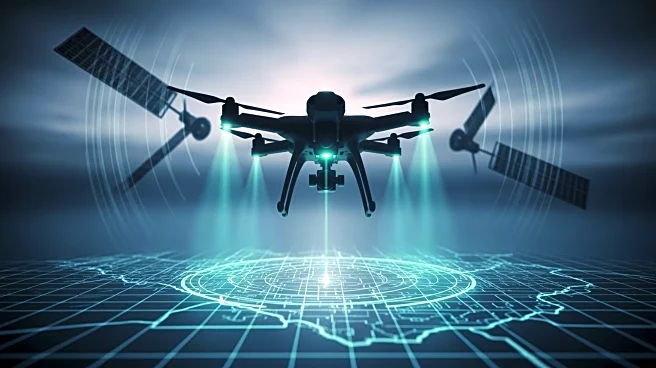
The Russian military has reportedly begun equipping its attack drones with Starlink satellite receivers, enhancing their operational range and precision. According to the Institute for the Study of War (ISW), these modifications allow Russian forces to conduct
more accurate strikes by using Starlink for control, rather than relying solely on global navigation satellite services. This development has been observed in the BM-35 loitering munition and other drones like Shahed and Molniya. The use of Starlink is enabling Russian drones to target high-value Ukrainian assets, such as missile systems and artillery launchers, and has been linked to attacks on critical infrastructure, including a passenger train. The integration of Starlink into Russian military operations appears to have started experimentally in 2024 and has since become more widespread.
Why It's Important?
The use of Starlink-equipped drones by Russia represents a significant shift in the dynamics of the conflict in Ukraine, potentially altering the strategic balance. This development underscores the dual-use nature of commercial satellite technology, which can be repurposed for military applications. For Ukraine, this poses a heightened threat to its critical infrastructure and military assets, necessitating an urgent need for enhanced air defense systems. The situation also raises questions about the control and regulation of satellite technology in conflict zones, as well as the responsibilities of companies like SpaceX, which operates the Starlink network. The broader implications could affect international policies on technology transfer and the militarization of space-based assets.
What's Next?
In response to the increased threat from Starlink-equipped drones, Ukraine may seek to bolster its air defense capabilities, potentially with assistance from international allies. This could involve acquiring more advanced point air defense systems to counter the enhanced range and precision of Russian drones. Additionally, there may be diplomatic and regulatory discussions at the international level regarding the use of commercial satellite technology in military operations. Companies involved in providing such technologies might face increased scrutiny and pressure to ensure their systems are not used in ways that exacerbate conflicts.
Beyond the Headlines
The integration of commercial satellite technology into military operations highlights the ethical and legal challenges associated with dual-use technologies. It raises questions about the accountability of private companies in conflict situations and the potential need for international regulations governing the use of such technologies. The situation also reflects broader trends in modern warfare, where technological advancements are rapidly changing the nature of military engagements and the strategies employed by state and non-state actors.