


What's Happening?
A recent academic analysis published in the journal Agriculture reveals the rapid growth of smart farming as a scientific domain and its alignment with the United Nations Sustainable Development Goals (SDGs). The study, titled 'Smart Farming and the SDGs:
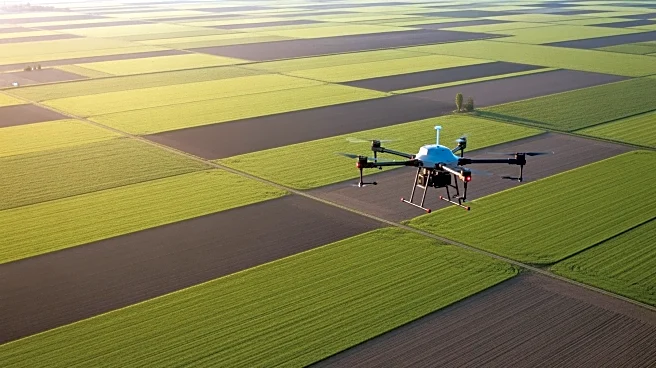
Emerging Research Patterns and Sustainability Implications,' examines over four decades of research, highlighting the transition of smart farming from an emerging topic to a mature field. The analysis shows a significant increase in publication activity post-2014, with over 90% of studies published after 2017. This growth is driven by rising food demand, climate variability, and technological advancements such as artificial intelligence and wireless connectivity. The study identifies key themes in smart farming, including precision agriculture, Internet of Things systems, and machine learning, which are reshaping agricultural practices. It also notes the concentration of research in high-impact journals, indicating a recognized intellectual core in the field.
Why It's Important?
The expansion of smart farming research is crucial for addressing global sustainability challenges. By aligning with SDGs such as Zero Hunger, Good Health and Well-being, and Climate Action, smart farming contributes to increased yields, improved resource efficiency, and reduced environmental impact. The integration of digital technologies in agriculture supports more precise and efficient farming practices, which are essential for food security and climate resilience. The study emphasizes the interconnected nature of smart farming's contributions, highlighting its role in advancing multiple sustainability goals simultaneously. This research underscores the importance of smart farming in transforming traditional agricultural systems to meet the demands of a growing population and changing climate conditions.
What's Next?
The study suggests that overcoming adoption barriers is critical for realizing the full potential of smart farming. Challenges such as high upfront costs, limited connectivity, and data literacy gaps need to be addressed, particularly in developing regions. Policymakers are encouraged to invest in rural connectivity, affordable sensing technologies, and training programs to facilitate adoption. Transparent data governance frameworks and policies promoting interoperability can help build trust among farmers. The study calls for coordinated international strategies to ensure that smart farming innovations reach smallholder and resource-constrained farmers, emphasizing the need for collaboration between governments, research institutions, and the private sector.
Beyond the Headlines
The study highlights the socio-technical nature of smart farming, where farmers are active decision-makers rather than passive recipients of technology. Understanding farmers' perceptions and local contexts is crucial for successful adoption. The research points to the importance of trust, perceived usefulness, and ease of use in technology acceptance. These insights have significant implications for designing effective policies and support systems that encourage the adoption of smart farming technologies. The study also underscores the need for international collaboration to bridge the gap between scientific research and practical implementation, ensuring that smart farming benefits are accessible to all farmers.